
How to Analyze Top-Ranking Blog Posts for Better SEO


How to Analyze Top-Ranking Blog Posts for Better SEO
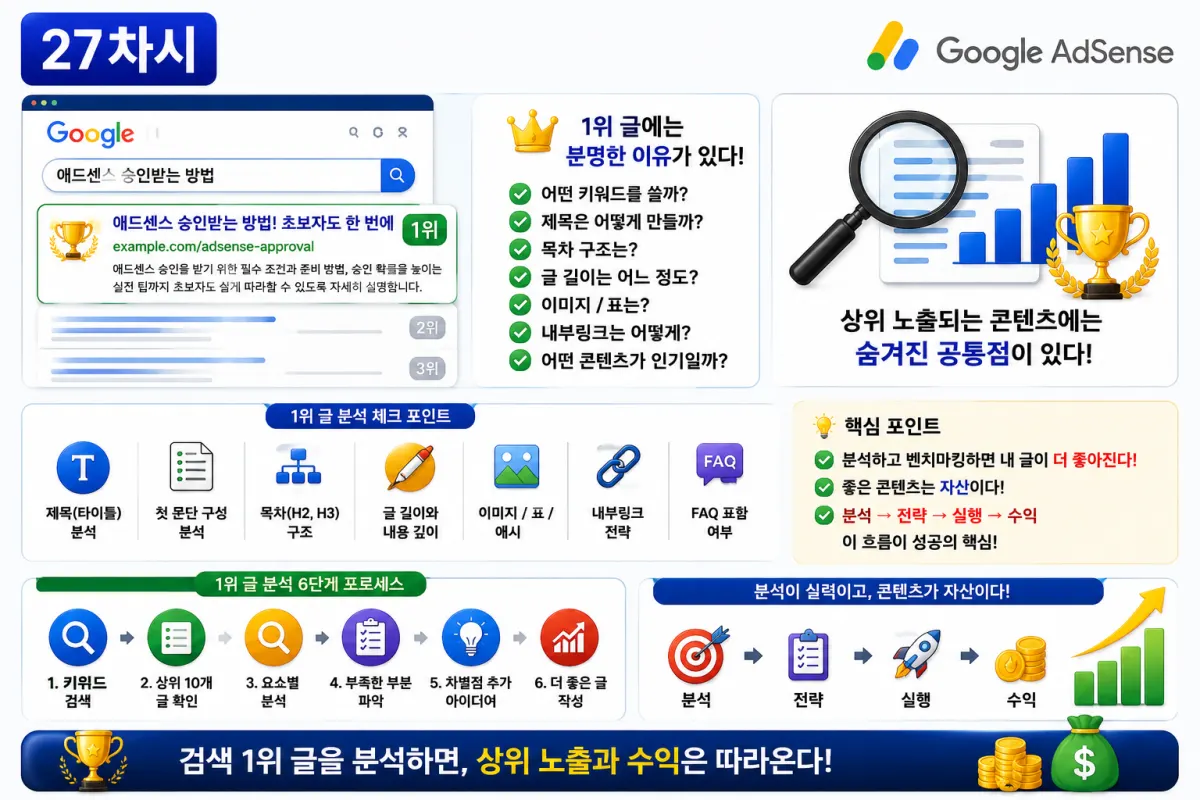
There's always a clear reason why certain blog posts consistently rank #1 in search results.
Many people assume these articles became number one by luck,
but the reality is that multiple SEO factors work together to achieve this position.
In this lesson, we'll explore how to analyze top-ranking content and apply its strengths to your own writing.
Why Analyze Top-Ranking Posts?
The #1 result in search rankings represents the content Google currently considers the best.
In other words,
it serves as a practical guide for understanding what types of content Google favors.
It's important to understand why these posts receive high ratings
rather than simply copying them.
Analyze the Title First
The first thing to check is the title.
Top-ranking articles typically:
Include primary keywords,
Clearly address search intent,
Use compelling language that encourages clicks.
For example,
How to Get AdSense Approval
is less effective than
How to Get AdSense Approval! A Step-by-Step Guide for Beginners
which directly addresses the reader's concerns.
Analyze the First Paragraph
Top-ranking posts often answer visitors' questions immediately in the first paragraph.
Rather than including lengthy introductory statements,
they clearly state what the article will cover.
The goal is to make readers want to continue reading.
Check the Table of Contents Structure
Good content typically follows a similar structure.
For example:
Concept explanation,
How to use it,
Advantages,
Disadvantages,
Important notes,
FAQs,
Conclusion.
This clear organization significantly improves content quality and readability.
Analyze the Length
Check how long top-ranking posts are.
Most high-ranking articles contain enough detail to fully address visitors' questions.
The key isn't just writing longer content,
but including all necessary information without omissions.
Analyze Images and Examples
Top-ranking posts rarely consist of text alone.
They typically include images,
tables,
examples,
checklists,
and FAQs
to make complex information easier to understand.
Many use a single image to explain complicated concepts clearly.
Check for FAQs
Many top-ranking posts include comprehensive FAQs.
For example:
How long does AdSense approval take?
When do SEO results become visible?
What is CPC?
These directly address common visitor questions.
Including FAQs significantly improves user satisfaction.
Analyze Internal Links
Top-ranking posts naturally connect to related articles.
For example,
an SEO article might link to pieces about:
keyword research,
CTR,
RPM,
and Search Console.
This keeps visitors engaged on your site longer.
Identify What's Missing
The key to effective analysis isn't just focusing on strengths.
You should also identify weaknesses in top-ranking posts.
For example:
Lack of up-to-date information,
Fewer examples,
Insufficient images,
Complex explanations.
Addressing these gaps can help you create better content than the top results.
Don't Just Copy
Top-ranking posts are reference materials,
not templates to copy directly.
Copied content or merely changing wording doesn't help SEO.
Use the structure as a guide,
but create original content based on your own experience and perspective.
Common Mistakes Beginners Make
Here are frequent errors people make when analyzing top-ranking posts:
Only copying the title,
Reading only the first article,
Copying content verbatim,
Failing to create differentiation,
Not analyzing search intent.
The goal of analyzing top-ranking posts is
to create better content—not simply imitate it.
Top-Ranking Analysis Checklist
Before writing your article, verify these elements:
How was the title constructed?
What does the first paragraph cover?
How is the table of contents structured?
Which images were used?
Are there FAQs included?
How are internal links connected?
What unique value does your content provide?
Using this checklist can increase your chances of achieving top rankings.
The Best Strategy Is Creating Better Content
SEO's goal isn't to beat the #1 result,
but to create content that provides more value to visitors.
If you offer clearer explanations,
more up-to-date information,
more experience-based insights,
and richer examples,
Google is more likely to rank your content highly.
Conclusion
Top-ranking posts are the best SEO reference material available.
By consistently analyzing these top results, learning from their strengths,
and addressing their weaknesses,
your content quality will continue to improve.
Remember always to focus on analysis and improvement rather than copying.
In our next lesson, we'll explore creating a system for writing 20 SEO articles per day using ChatGPT and automation techniques,
allowing you to maintain quality while significantly reducing content production time.
FAQ
Why should I analyze top-ranking blog posts instead of just copying them?
Analyzing top posts helps you understand why they rank well, allowing you to create better content based on your unique perspective rather than simply copying existing material.
What elements should I focus on when analyzing a top-ranking post?
Focus on the title structure, first paragraph, table of contents, length, images/examples used, FAQs, internal linking, and identify missing elements to improve upon.
Korean Source
This article is an English localization of a Korean-language report from BlogScore. Original: [27차시-고급편] 검색 1위 글 분석하는 방법! 상위 노출되는 콘텐츠의 비밀을 파헤쳐 보자