
Health Center AI Medical System Adoption Status and User Experience


Government AI Primary Healthcare Strategy: University Hospital-Level Care at Health Centers
The government is advancing its 'AI Primary Healthcare Strategy,' which aims to introduce AI-assisted medical systems in health centers. This initiative targets resolving regional and essential healthcare gaps while enabling rapid treatment in vulnerable areas. GC Media's developed 'Doctor Love AI' solution supports university hospital-level care at health centers, according to reports.
AI Primary Healthcare Strategy Announcement and Key Details
The government announced its 'AI Primary Healthcare Strategy' on July 22, targeting the resolution of regional and essential healthcare gaps. The policy includes three main strategies and ten key initiatives: introducing AI medical systems in health centers, connecting 72 public hospitals, and expanding AI use in emergency patient transfers.
Notably, 'Doctor Love AI,' developed by GC Media, supports communication between medical staff and patients at health centers, enabling university hospital-level care. The solution began being distributed to health centers starting August 6, with attention drawn to the fact that health centers can now provide university hospital-level care.
Adoption Status of AI Medical Systems in Health Centers
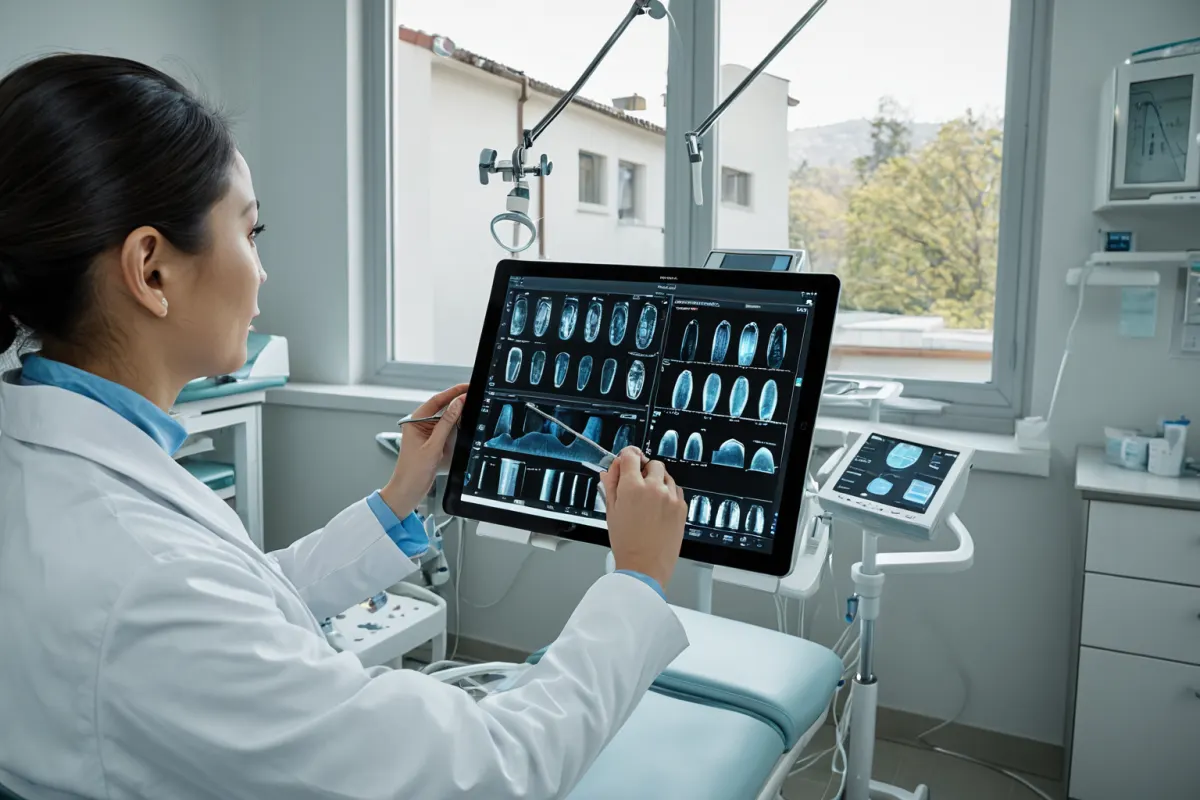
The government is introducing AI medical support systems in health centers and connecting 72 public hospitals as part of efforts to address regional healthcare gaps. In vulnerable areas, 'AI packages' are supporting rapid treatment, particularly with PANO AI proving its diagnostic capabilities at the level of a decade-experienced radiology specialist in oral diagnosis.
The Gimcheon City Health Center has adopted an 'AI Smart Oral Examination System' supplied by DIDIH, as reported on July 29. Lunit is known to have supplied its AI solution to a military hospital in the Philippines for the first time.
The oral disease automated diagnosis support solution 'PANO' completed FDA certification on July 12, 2024, and is cited as an example contributing to the government's AI healthcare strategy.
AI Application Areas and Current Status
The government aims to distribute AI medical support tools across medical settings nationwide, including health centers, and has finalized the 'AI Primary Healthcare Strategy' to provide university hospital-level AI medical services. This is based on various cases of AI adoption in different medical fields, including the FDA-certified 'PANO' solution.
Expanding AI use in emergency patient transfers is also underway, drawing attention for enabling faster responses in emergencies. The introduction of AI medical systems at health centers represents a strategic approach by the government to address healthcare disparities and regional treatment inequalities.
Nationwide health centers are adopting 'AI packages,' with reports highlighting that rapid treatment has become possible in vulnerable areas. This reflects the government's intent to reduce regional healthcare gaps, ensuring access to high-quality care within the golden hour regardless of location.
Healthcare Disparity Reduction Strategy
The Ministry of Health and Welfare announced its intention to eliminate healthcare disparities through a '5 Regions 3 Specialties' medical network. This aims to standardize medical services across regions, ensuring that high-quality care within the golden hour is accessible from anywhere.
The government targets reducing regional healthcare gaps by introducing AI medical systems in health centers, which is being concretized through connecting 72 public hospitals and the 'AI Primary Healthcare Strategy.' Particularly, PANO AI's proven diagnostic capabilities at a specialist level in oral diagnosis are highlighted as a case contributing to the government's AI healthcare strategy.
Current Status and Future Plans for AI Medical Adoption
The government has developed and begun distributing the 'Doctor Love AI' solution, which supports university hospital-level care at health centers. This initiative started on August 6 and will expand further to connect 72 public hospitals.
The oral disease automated diagnosis support solution 'PANO' has completed FDA certification and is recognized as a key case contributing to the government's AI healthcare strategy. Lunit reportedly supplied its AI solution to a military hospital in the Philippines for the first time.
The Gimcheon City Health Center has adopted an 'AI Smart Oral Examination System' supplied by DIDIH, reported on July 29, 2026. These examples demonstrate that the government's AI healthcare strategy is being applied in real-world settings.
Key Issues with AI Medical System Implementation
As part of advancing its 'AI Primary Healthcare Strategy,' the government has introduced AI solutions supporting university hospital-level care at health centers. This aims to resolve regional and essential healthcare gaps while enabling rapid treatment in vulnerable areas.
However, some reports note that further validation is needed on how effectively these AI medical systems are applied in actual settings. While PANO AI has proven its diagnostic capabilities at a specialist level in oral diagnosis, it remains unverified for other medical fields.
Policymaking Effectiveness for Healthcare Disparity Reduction
The Ministry of Health and Welfare announced the elimination of healthcare disparities through a '5 Regions 3 Specialties' medical network. This policy aims to standardize medical services across regions, ensuring access to high-quality care within the golden hour from anywhere.
The government's 'AI Primary Healthcare Strategy' is expected to contribute to reducing healthcare gaps by introducing AI medical systems in health centers and connecting 72 public hospitals. In particular, rapid treatment support in vulnerable areas will play an important role in narrowing regional healthcare disparities.
Government AI Healthcare Strategy and Challenges
The government is implementing the 'AI Primary Healthcare Strategy' to introduce AI solutions supporting university hospital-level care at health centers. This targets resolving regional and essential healthcare gaps while enabling rapid treatment in vulnerable areas.
In the future, the government plans to expand AI medical system applications across more health centers and promote AI adoption in other medical fields. However, validating the actual effectiveness and utility of AI solutions remains a key challenge for the government to address moving forward.
Information to Verify
It is necessary to further confirm whether introducing AI medical systems at health centers through the government's 'AI Primary Healthcare Strategy' is appropriate and how effectively it is being applied in actual settings. While PANO AI has proven its diagnostic capabilities at a specialist level in oral diagnosis, other medical fields remain unverified.
Frequently Asked Questions
Q: How is the government introducing AI into medical settings?
The government is distributing 'AI packages' to health centers for medical assistance systems and connecting 72 public hospitals through three main strategies and ten key initiatives as part of its push toward AI healthcare transformation.
Q: What field does 'PANO' AI operate in, and has it received FDA certification?
'PANO' AI is an automated diagnosis support solution for oral diseases. It completed FDA certification on July 12, 2024, and is reported to have proven diagnostic capabilities at the level of a decade-experienced radiology specialist in oral diagnosis.
Q: How will the AI healthcare strategy contribute to reducing regional healthcare disparities?
The government announced its intention to eliminate healthcare disparities through a '5 Regions 3 Specialties' medical network. This involves introducing AI medical systems at health centers and connecting 72 public hospitals to address regional treatment inequalities, ensuring high-quality care within the golden hour from anywhere.
Frequently Asked Questions
The government is advancing its 'AI Primary Healthcare Strategy,' which aims to introduce AI-assisted medical systems in health centers. This initiative targets resolving regional and essential healthcare gaps while enabling rapid treatment in vulnerable areas. GC Media's developed 'Doctor Love AI' solution supports university hospital-level care at health centers, and the oral disease automated diagnosis support solution 'PANO' has completed FDA certification. The policy is expected to contribute to reducing healthcare disparities and addressing regional treatment inequalities, with future validation of AI solution effectiveness and utility being crucial.
You can view similar articles in one place.
View Related ArticlesFAQ
How is the government introducing AI into medical settings?
The government is distributing 'AI packages' to health centers for medical assistance systems and connecting 72 public hospitals through three main strategies and ten key initiatives as part of its push toward AI healthcare transformation.
What field does 'PANO' AI operate in, and has it received FDA certification?
'PANO' AI is an automated diagnosis support solution for oral diseases. It completed FDA certification on July 12, 2024, and is reported to have proven diagnostic capabilities at the level of a decade-experienced radiology specialist in oral diagnosis.
How will the AI healthcare strategy contribute to reducing regional healthcare disparities?
The government announced its intention to eliminate healthcare disparities through a '5 Regions 3 Specialties' medical network. This involves introducing AI medical systems at health centers and connecting 72 public hospitals to address regional treatment inequalities, ensuring high-quality care within the golden hour from anywhere.
Korean Source
This article is an English localization of a Korean-language report from BlogScore. Original: 보건소 AI 진료 시스템 도입 현황과 사용자 경험