
The 'Handwashing Project' for Disabled Students: Kim Kyu-won's Story and Support Policies


Kim Kyu-won became widely known during his social service work for hand-washing the undergarments of disabled students, a story that gained attention after he supported a wheelchair-bound student with congenital muscular dystrophy through graduation. According to media reports, Kim meticulously washed soiled underwear caused by incontinence and was praised as 'a teacher I will never forget.' This act transcended personal assistance, becoming a catalyst for greater interest and action in social welfare.
Kim Kyu-won's Support Case During Social Service
In early 2026, while serving as a social service worker, Kim cared for a student with congenital muscular dystrophy who used a wheelchair. The student faced significant challenges in daily activities, particularly in managing bowel movements, which often led to soiled underwear requiring regular washing. Kim witnessed these situations firsthand and provided comprehensive support from laundry to graduation.
Although this was not part of an official disability welfare project but rather personal assistance, it deeply moved the public and was widely covered by media. On August 7, 2026, news reports highlighted this story, earning Kim the title 'a teacher I will never forget.' His actions, going beyond his social service role, drew attention as a form of individual civic engagement that raised awareness about disability support.
Kim was particularly noted for promptly addressing various situations faced by disabled students. For instance, he immediately washed soiled underwear after incontinence incidents to protect the student's self-esteem—a gesture reflecting deep understanding and empathy toward disability-related issues.
The Student's Situation and Kim Kyu-won's Support
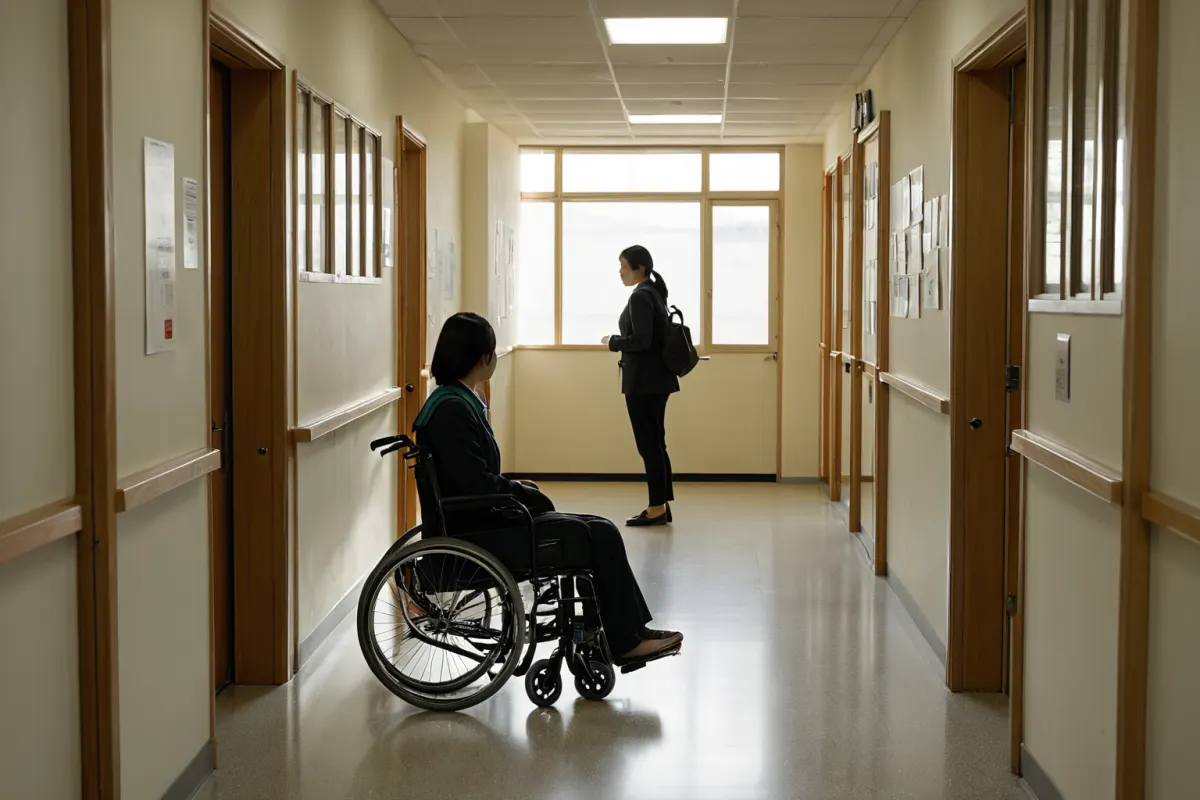
The disabled student had congenital muscular dystrophy, making daily activities difficult while using a wheelchair. Frequent incontinence incidents led to soiled underwear, significantly affecting the student’s emotional well-being. Disabled students often face social discrimination or exclusion in regular school environments, necessitating careful management.
Kim provided meticulous care from washing undergarments to supporting the student through graduation. His act of hand-washing urine-soaked underwear resonated widely, being viewed not just as physical assistance but as an effort to safeguard the student’s emotional stability and self-esteem. Supporting the student all the way to graduation was seen as a meaningful action aiding social integration and independence for disabled students, contributing to improved public awareness about disability support.
In disability welfare, such personal stories often inspire broader public initiatives. Media reports noted that Kim’s actions contributed to strengthening disability support programs at welfare centers and schools, showing how small individual efforts can lead to societal change.
When the Story Broke and Media Response
Kim’s story was widely reported on August 7, 2026. It highlighted civic engagement beyond his role as a social service worker, drawing significant public attention.
Various media outlets praised Kim’s actions positively, especially amid growing public interest in disability-related issues. One outlet published a special feature titled 'The Handwashing Project for Disabled Students,' discussing how Kim’s behavior spurred shifts in societal perceptions of disability support.
Kim, who is also an SNL (Saturday Night Live Korea) performer, gained wider recognition through this story. His actions were seen as more than personal assistance—they became a catalyst for greater interest and action in social welfare. This case also highlighted how the social service program can contribute to public welfare activities like disability support.
Kim’s behavior conveyed a message of 'big changes from small daily acts,' resonating with many who see how minor practical efforts can collectively drive significant societal change.
How to Support and Related Information
While Kim’s case was not directly linked to an official disability support project, it stemmed from his personal actions as a social service worker. The article focuses on this individual initiative rather than formal programs.
Disability welfare information can be obtained through local disability welfare centers or government-supported programs. For example, the Seoul Disability Welfare Center and the Korean Federation of the Disabled offer various support services including job creation for disabled individuals, educational support, and medical cost assistance.
Social service workers gain experience in welfare fields, which is supported by government-run programs. Their activities can contribute to addressing various social issues, not limited to disability support.
In disability welfare, personal initiatives like Kim’s often lead to expanded public programs. Media reported that his actions helped strengthen community-based disability support activities, demonstrating how individual efforts can inspire societal change.
Readers should note: Disability welfare programs vary by region, so it is recommended to visit or call the relevant agencies directly for accurate information. Those interested in disability support through social service work can collaborate with related organizations to participate in various programs.
Key Information to Verify
Kim Kyu-won’s story was reported by multiple media outlets on August 7, 2026. It was a personal initiative, not part of his social service duties.
Disability welfare programs are government-led and offer various support services regionally, including job creation, educational assistance, and medical cost subsidies. These programs are managed by local governments through their websites or phone consultations.
Kim’s case was a personal effort without direct connection to official support programs but contributed to raising awareness about disability welfare. It is particularly noted for deepening public understanding of social issues related to disabilities.
Readers should note: Disability welfare programs vary by region, so it is recommended to visit or call the relevant agencies directly for accurate information. Social service workers interested in disability support can collaborate with organizations to participate in various programs.
Frequently Asked Questions
Is Kim Kyu-won's case related to a specific project?
No, his story is not directly linked to an official disability support project but reflects personal actions during his social service work.
Where can I find information about disability welfare programs?
Information can be obtained from organizations such as the Seoul Disability Welfare Center and the Korean Federation of the Disabled.
Was Kim Kyu-won's action part of his social service duty?
No, it was a personal initiative beyond his official duties as a social service worker.
You can view more articles on similar topics in one place.
View Related ArticlesFAQ
Is Kim Kyu-won's case related to a specific project?
No, his story is not directly linked to an official disability support project but reflects personal actions during his social service work.
Where can I find information about disability welfare programs?
Information can be obtained from organizations such as the Seoul Disability Welfare Center and the Korean Federation of the Disabled.
Was Kim Kyu-won's action part of his social service duty?
No, it was a personal initiative beyond his official duties as a social service worker.
Korean Source
This article is an English localization of a Korean-language report from BlogScore. Original: 장애학생 손빨래 프로젝트 김규원: 참여 방법과 지원 정책