
Growing Spider Plants: Easy Gardening Tips for Beginners
Growing Spider Plants: Easy Gardening Tips for Beginners
Spider plants are popular indoor plants known for their air-purifying qualities and decorative appeal, making them ideal for single-person households and pet owners. They're easy to care for, perfect for beginners, and considered safe for pets.
These plants absorb harmful substances from the air, helping to purify indoor environments. Their simplicity in care and ability to beautify spaces contribute to their popularity among single-person households.
Spider plants are known to effectively remove common indoor pollutants like formaldehyde and benzene. This is especially beneficial in modern living where chemical products are frequently used indoors, improving overall air quality.
As a low-maintenance indoor plant, spider plants thrive with proper watering and lighting conditions. They're particularly well-suited for small apartments or single-person households looking to optimize space.
Spider Plant Care Tips
Watering: Water when the soil feels dry. Some people use leftover tea bags to water their plants, as the residue can provide nutrients.
To use this method, let the tea bag cool, then place it in water and set it on top of the spider plant's soil. This allows slow nutrient release from the tea bag into the plant.
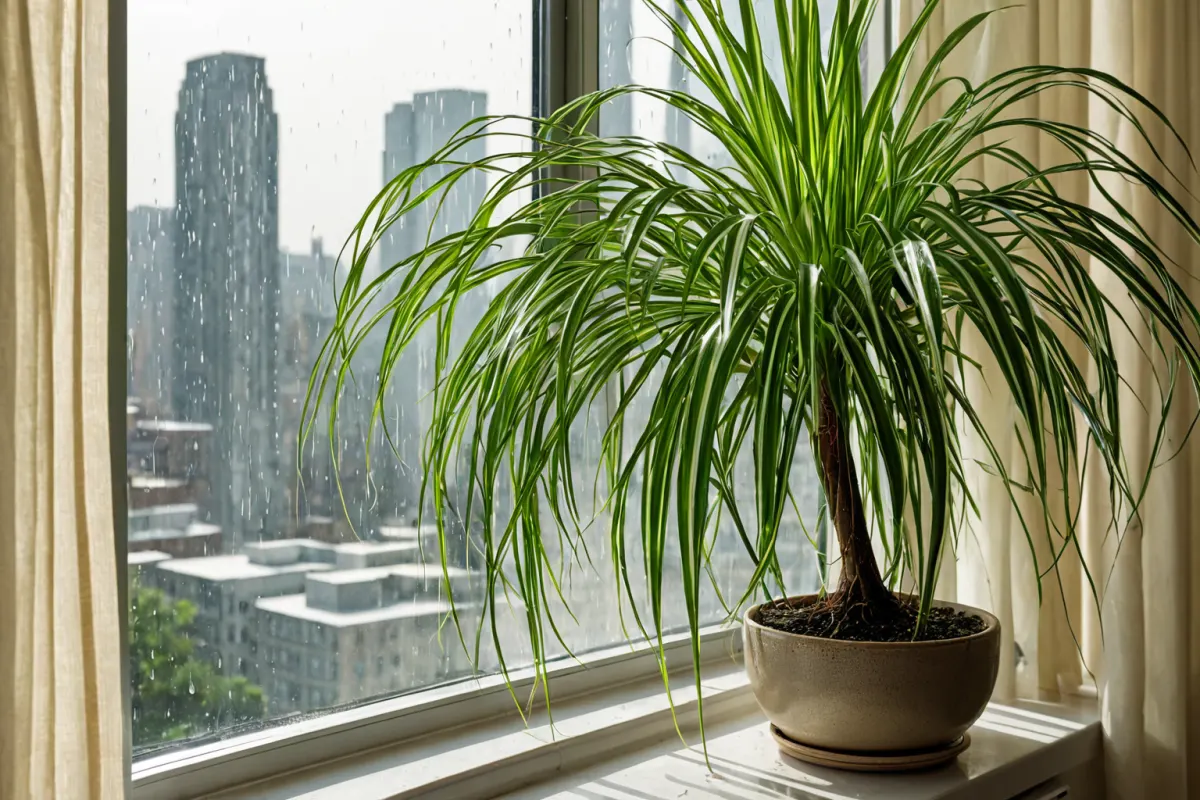
Lighting: Avoid direct sunlight; place them where indirect light reaches. They grow well near windows or under indoor lighting, especially on north-facing windowsills or in shaded areas.
Moisture: Spider plants prefer slightly moist conditions but don't tolerate excessive humidity. In dry seasons, mist the leaves occasionally to maintain appropriate moisture levels.
Keeping Spider Plants with Pets
Spider plants are safe for households with pets. Cats and dogs can eat the leaves without risk of toxicity.
When choosing indoor plants for homes with pets, it's important to check for toxicity. Spider plants are non-toxic to pets, making them a worry-free choice for pet owners.
They grow well indoors when given appropriate humidity and lighting conditions. They're particularly suitable for single-person households or small living spaces.
Spider Plants in Interior Design
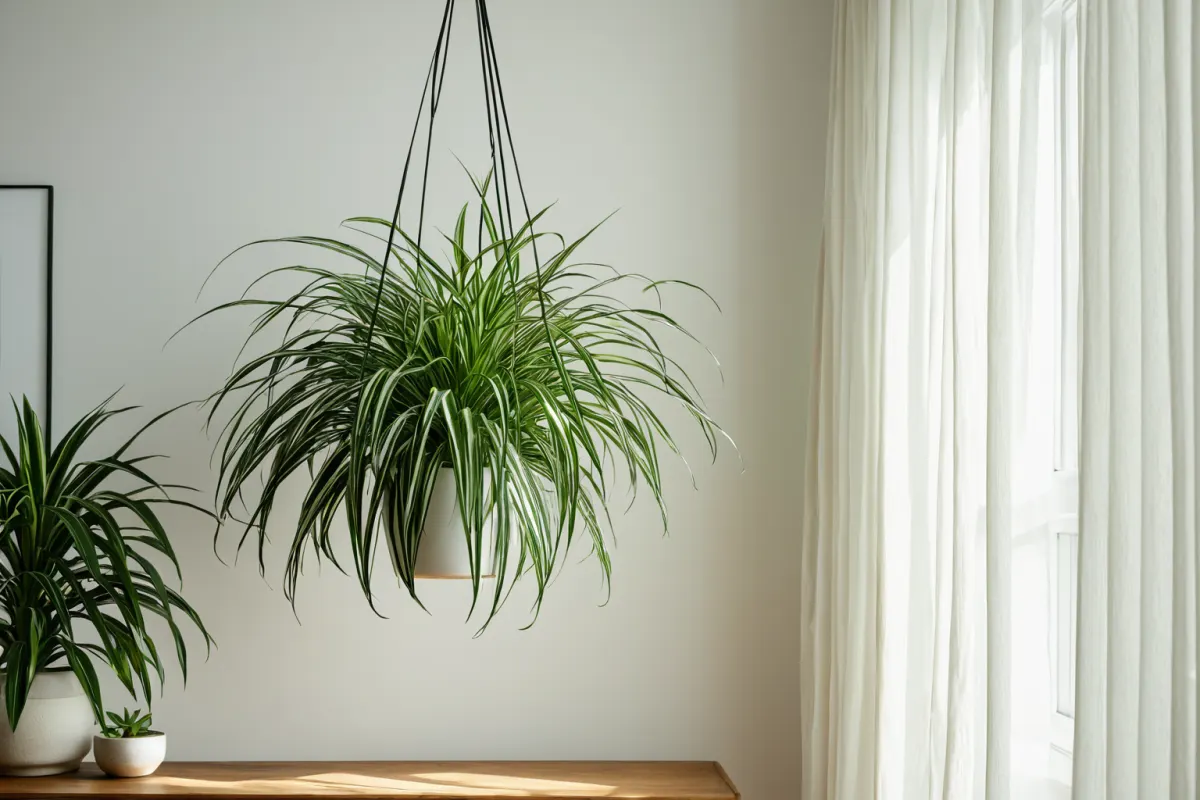
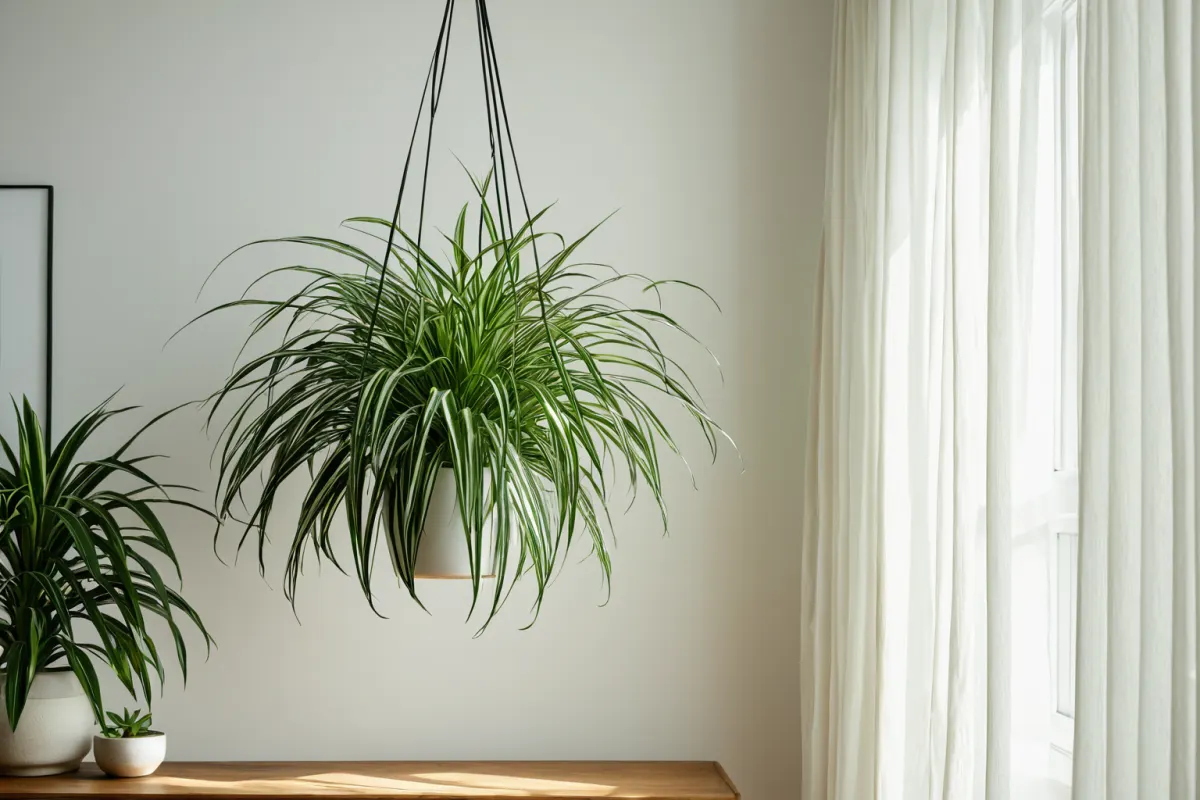
Spider plants complement indoor decor with their trailing growth pattern, making them ideal for walls or shelves. Their elegant appearance serves as a focal point in small spaces and softens the overall atmosphere of a room.
The long, smooth stems and leaves pair well with modern interior styles. They work particularly well as accent pieces in minimalist or contemporary settings with simple furniture.
Many people choose spider plants for both their air-purifying benefits and decorative qualities. This dual purpose contributes to creating a healthier living environment while enhancing aesthetic appeal.
Spider Plant Features and Care Tips
Spider plants are easy-to-care-for indoor plants, making them ideal for beginners. Their unique trailing leaves make them popular as decorative items.
Propagation is simple: cut a stem and place it in water or soil to grow new plants. This method is accessible even for those with no gardening experience.
Care requirements vary slightly by season. They grow actively in spring and fall, require less frequent watering in summer, and need temperature control during winter.
Frequently Asked Questions
Where do spider plants thrive best?
They grow well with indirect light and proper moisture levels. Avoid direct sunlight.
Are spider plants safe for pets?
Yes, they're non-toxic to cats and dogs. Pets can safely eat the leaves without risk of poisoning.
How do you water with tea bags?
Place a cooled used tea bag in water and set it on top of the plant's soil. The residue will slowly release nutrients into the plant over time.
Explore more articles on similar topics.
View Related ArticlesFAQ
Where do spider plants thrive best?
They grow well with indirect light and proper moisture levels. Avoid direct sunlight.
Are spider plants safe for pets?
Yes, they're non-toxic to cats and dogs. Pets can safely eat the leaves without risk of poisoning.
How do you water with tea bags?
Place a cooled used tea bag in water and set it on top of the plant's soil. The residue will slowly release nutrients into the plant over time.
Korean Source
This article is an English localization of a Korean-language report from BlogScore. Original: 스파이더 플랜트 키우기: 초보자도 쉽게 성공하는 가드닝 팁