
Government Physical AI Support Policy Explained: Structure and Budget Breakdown

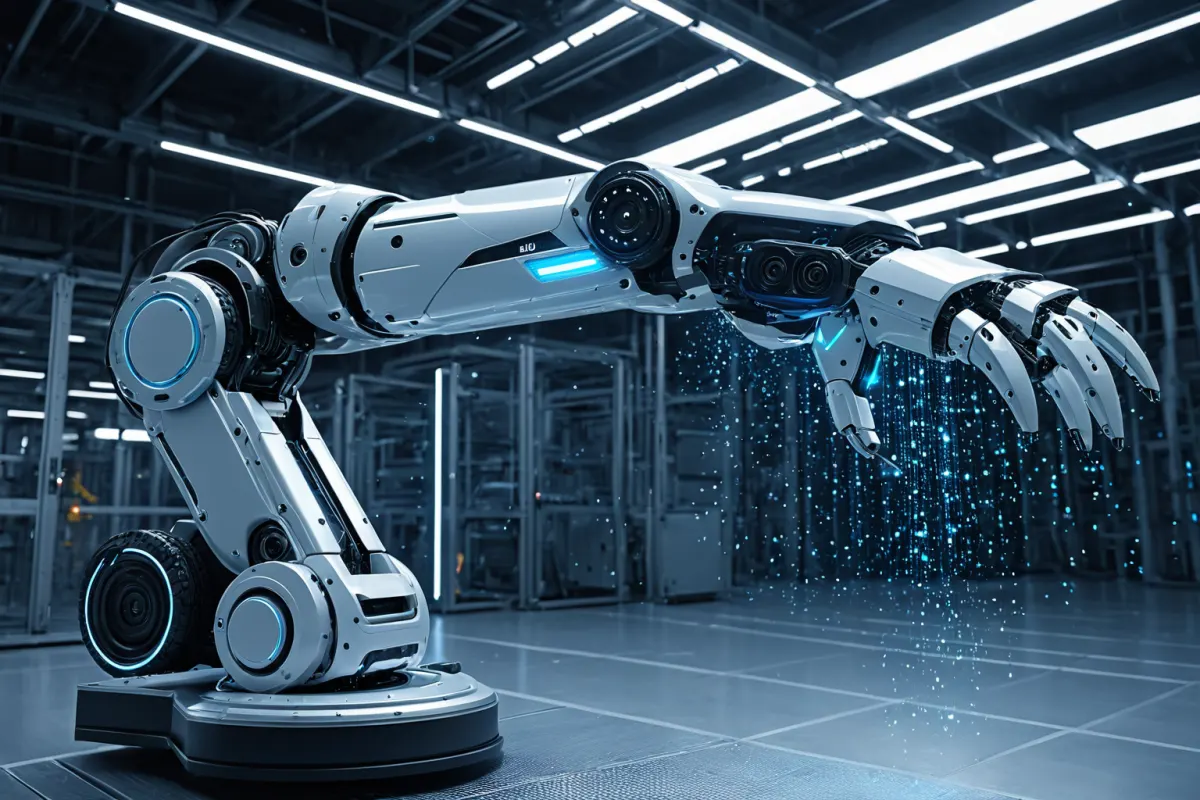
The Government Physical AI Support Policy essentially aims to help AI better perform real-world tasks—such as robotics, manufacturing, mobility, and caregiving—by aligning national industry efforts with budgetary support. For those searching this up now, the key questions are likely: What exactly is being supported, where is the money going, and how does it relate to your field? The core focus isn't just developing AI technology in isolation but structuring initiatives to rapidly commercialize physical AI solutions that can be deployed on the ground.
Core Direction of the Government Physical AI Support Policy
Physical AI differs from screen-based chatbots. It reads environments through sensors, makes decisions, and moves physical devices like robotic arms or mobile units. That's why this policy views software not in isolation but as part of a broader package including hardware, control systems, data, and real-world testing.
This policy is gaining attention because it delivers immediate results on the industrial front. It’s being applied to areas where AI can reduce repetitive human tasks—such as factory automation, logistics, driving assistance, disaster response, medical support, and caregiving robots. Rather than just a futuristic tech concept, this addresses productivity and safety simultaneously, making budget allocation more feasible.
You can find similar articles on this topic in one place.
View Related ArticlesHow the Business Structure is Divided
Most government support programs don't end with just R&D. The Government Physical AI Support Policy also typically divides efforts into basic research, core component development, real-world testing infrastructure, corporate collaboration, and commercialization support. Initially, universities and research institutions refine algorithms and control technologies, followed by companies integrating equipment and solutions for on-site testing.
For example, if developing a logistics warehouse robot: sensor recognition technology might be developed through a research project; robotic joints and control modules could be handled by component manufacturers; and separate pilot projects would test movement paths and work speeds in actual warehouses. Breaking it down this way minimizes failure costs and allows faster validation of results.
Key Areas Where Budget Is Allocated
Government funding often goes into less visible infrastructure first. This includes data collection systems, testing environments, public equipment, standardization, and safety verification. While you might see a single robot or AI model on the surface, the underlying environment is far more critical.
Another focus is supporting companies—especially SMEs and startups—which often have technology but lack testing facilities or initial mass production funding. The government helps lower participation barriers by covering prototype development costs, connecting with consortia, and supporting on-site implementation expenses. Ultimately, budget isn't just for tech R&D—it's also about enabling market entry.

Why Physical AI Is Harder Than Other AI
With physical AI, a prediction error doesn't just result in an incorrect answer; it could cause robots to drop objects, mobile units to collide with people, or equipment to malfunction. Therefore, accuracy alone isn't enough—safety, response speed, durability, and emergency stop features are equally important.
Because of this difference, the government uses more detailed evaluation criteria. Simple demo videos aren't sufficient; metrics like repetitive task performance, error rates, and real-world adaptability are required. For companies, preparing for these aspects upfront can reduce trial-and-error after winning a grant.
Real-World Applications in Practice
The easiest example is manufacturing: AI-powered vision systems and robots handling inspections, assembly, and material transport improve line speed and quality stability. Especially where repetitive decisions like defect detection are needed, physical AI shows significant value.
Caregiving is also a growing focus. As populations age rapidly, demand for robots that assist with meal preparation, mobility support, and medication delivery is rising. Here, user-friendliness matters as much as performance, so the government often collaborates on pilot projects in hospitals or care facilities.
In mobility, autonomous driving assistance systems and logistics mobile units are common examples. Even without full autonomy, automated movement within limited zones can deliver significant cost savings. That’s why the Government Physical AI Support Policy focuses more on gradual expansion from applicable sites rather than aiming for one large-scale innovation at once.
Key Points for Businesses and Researchers
For businesses looking to participate, it's better to clearly define which real-world problem you're solving in a specific setting—not just highlight technical capabilities. For example, instead of saying "95% vision recognition accuracy," frame it as "reducing sorting time for damaged goods by 30% at night in logistics warehouses." This makes your proposal more compelling.
Researchers should plan data acquisition pathways and validation environments from the start. Physical AI often struggles to commercialize without sufficient real-world data, so building a structure that collects sensor data, failure cases, and edge scenarios early on is crucial. This is also a common point of evaluation in grant applications.
How to Read Budget Flow
Government budgets rarely flow all at once but come in phases: initial planning and feasibility studies, followed by pilot testing, then scaling up based on successful areas. So it's more important to understand which phase the funding is allocated for rather than just judging by total amount.
In practice, checking official notices for project purpose, implementing entities, test locations, private sector matching ratios, and performance metrics can clarify direction. The required documents and competitive advantages differ depending on whether a project focuses on equipment adoption, algorithm development, or real-world testing—missing this could lead to rejection even with strong technology.
Related Trends to Watch
Don't view the Government Physical AI Support Policy in isolation; it's best understood alongside robotics industry initiatives, manufacturing innovation programs, regional industrial zones, and data infrastructure projects. Multiple ministries often share similar goals, so looking at broader trends rather than just one budget line gives a clearer picture.
In the future, safety standards and standardization will become increasingly important as physical AI adoption grows. Success depends not only on technical development but also on regulatory frameworks that ensure safe deployment in real environments. Thus, institutional improvements could be just as critical to policy success as technological progress.
FAQ
Q1. Which businesses benefit most from the Government Physical AI Support Policy?
Businesses with clear on-site application opportunities and existing testing spaces or partners tend to have an advantage. Proposals that clearly outline problem-solving scenarios—rather than just technical capabilities—are more likely to be selected.
Q2. Is all budget spent only on R&D?
No, the budget is also allocated to non-R&D areas like real-world testing infrastructure, safety validation, standardization, and commercialization support.
Q3. Can individuals participate directly?
Most opportunities are for businesses, universities, or research institutions, but consortium-based participation options often exist. If you're in a relevant field, check the specific requirements of each call for proposals to identify potential collaboration structures.
The latest support directions and detailed budgets vary by year according to official announcements. For accurate application or investment decisions, always consult the most current public notices before proceeding.
Continue exploring similar topics.
View Category ArticlesFAQ
Q1. Which businesses benefit most from the Government Physical AI Support Policy?
Businesses with clear on-site application opportunities and existing testing spaces or partners tend to have an advantage. Proposals that clearly outline problem-solving scenarios—rather than just technical capabilities—are more likely to be selected.
Q2. Is all budget spent only on R&D?
No, the budget is also allocated to non-R&D areas like real-world testing infrastructure, safety validation, standardization, and commercialization support.
Q3. Can individuals participate directly?
Most opportunities are for businesses, universities, or research institutions, but consortium-based participation options often exist. If you're in a relevant field, check the specific requirements of each call for proposals to identify potential collaboration structures.
Korean Source
This article is an English localization of a Korean-language report from BlogScore. Original: 정부피지컬AI육성 정책 정리: 사업 구조와 예산