
Five Legal Standards for Witness Selection in South Korea's National Assembly Committee
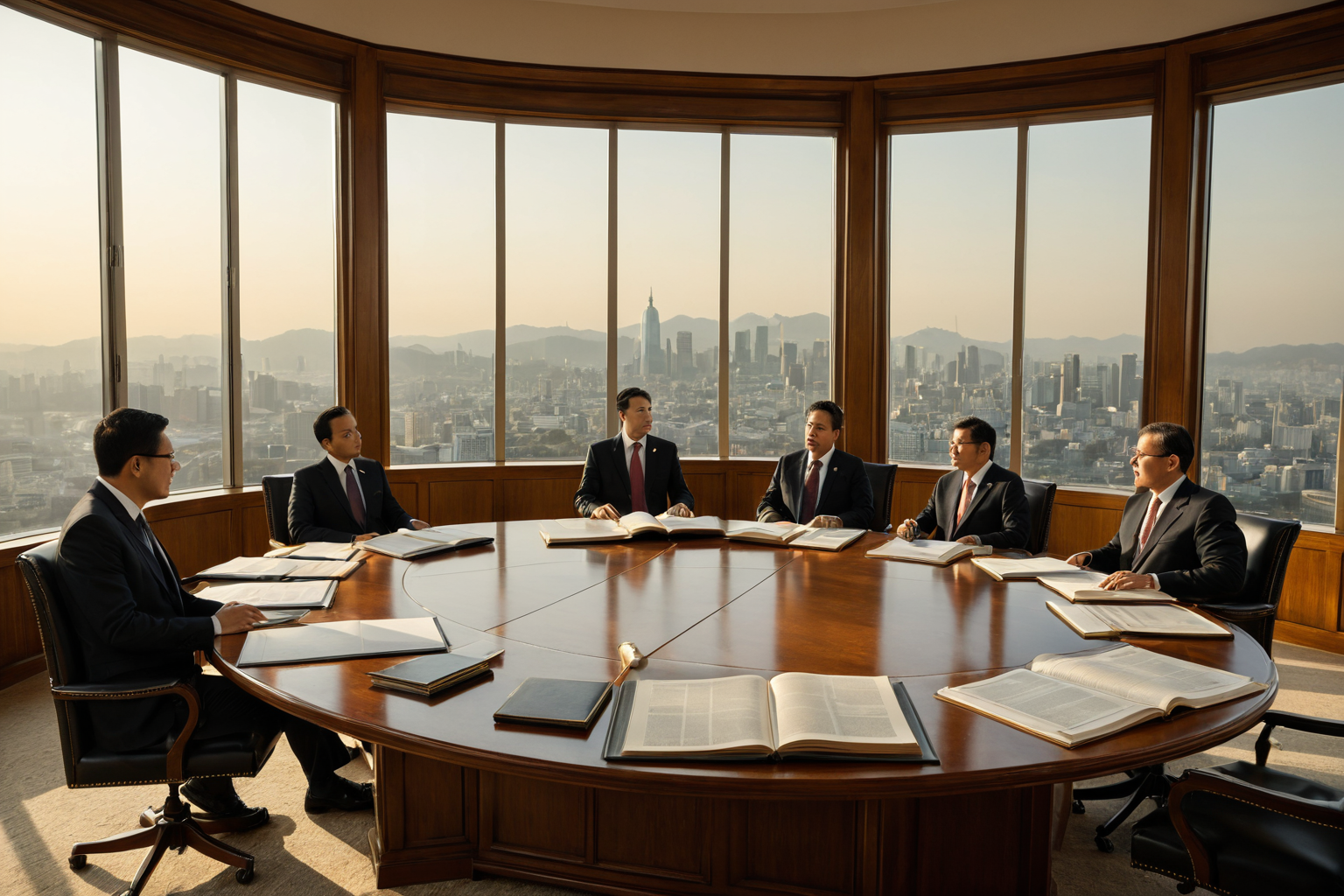
The ongoing debate over witness selection procedures in the National Assembly's Justice Committee has become a prominent example of political conflict in South Korea. Specifically, the dispute surrounding the selection of Chief Justice Jo Hee-dae for a parliamentary hearing on September 28, 2026, has sparked significant discussion about legal standards and procedures. This article outlines five key legal standards related to witness selection in the Justice Committee, analyzing them through real-world cases.
Core Legal Standards for Witness Selection Procedures
Witness selection in the Justice Committee is determined under Article 51 of the National Assembly Act, which states that 'committees may summon witnesses to hear testimony when deemed necessary.' However, interpretations regarding the scope and procedure of this provision have led to political disputes between parties.
Witness selection is not merely a committee decision but must adhere to legal foundations and procedures. For example, selecting high-ranking judicial officials like the Chief Justice of the Supreme Court requires particular caution, as it connects to the principle of judicial independence enshrined in Article 47 of the Constitution.
Specific Circumstances of the Witness Selection Controversy
On September 28, 2026, the Justice Committee decided to select Chief Justice Jo Hee-dae as a witness for a parliamentary hearing, led by the ruling party (Democratic Party). This appears to have been arranged to resolve disputes over judicial appointments. However, the opposition party (People Power Party) criticized it as an infringement on judicial authority and political retaliation.
Even after Chief Justice Jo Hee-dae stated 'Let's discuss this during the parliamentary hearing,' the committee proceeded to select him as a regular witness. The opposition argued that the committee failed to follow proper appointment procedures, claiming that the President should have been summoned instead of the Chief Justice.
This incident highlights political disputes over witness selection procedures in the Justice Committee, similar to the case during Kim Seung-won's personnel hearing. During that hearing, witness selection was not finalized due to lack of consensus between parties, raising questions about how the committee decides on witnesses for specific individuals.
Political Background and Legal Interpretation of Witness Selection
Witness selection in the Justice Committee often reflects political disagreements between ruling and opposition parties. In the September 28, 2026 incident, the ruling party sought to resolve judicial appointment disputes through witness selection, while the opposition labeled it as political retaliation.
Article 51 of the National Assembly Act not only specifies procedures for summoning witnesses but also requires that committee decisions do not violate constitutional principles. Therefore, selecting high-ranking judicial officials like the Chief Justice must be handled with caution to respect judicial independence.
Additionally, the opposition's claim about violating 'appointment' procedures reflects differences between personnel hearings and parliamentary hearings under the National Assembly Act. In personnel hearings, it is customary for the President to directly appoint sitting Supreme Court Justices, and some argue that this procedure should also be followed when selecting witnesses for parliamentary hearings.
Five Legal Standards for Witness Selection
When deciding on witness selection in the Justice Committee, five key legal standards should be considered. First, assess the necessity and reasonableness of summoning a witness under Article 51 of the National Assembly Act. Second, ensure that judicial independence is not infringed upon. Third, distinguish between personnel hearing procedures and parliamentary hearings to follow proper appointment procedures.
Fourth, consider the witness's position and professional neutrality. For example, as head of the judiciary, the Chief Justice must maintain neutrality, so direct political controversy should be avoided during parliamentary hearings. Fifth, avoid unilateral decisions without consensus between parties, as this may escalate political conflicts.
Case Analysis: Comparing Witness Selection Cases
The September 28, 2026 incident contrasts with the Kim Seung-won personnel hearing case. During that hearing, witness selection failed due to lack of consensus between parties. In contrast, the Chief Justice Jo Hee-dae case saw a unilateral decision led by the ruling party.
Additionally, on September 28, 2026, during the parliamentary hearing regarding the DMZ explosion incident, a relevant witness was selected for specialized review of the specific issue. This highlights how witness selection can be tailored to focus on particular topics in parliamentary hearings.
These cases demonstrate that decisions about witness selection go beyond procedural issues; they require balancing political interests with constitutional principles.
Key Considerations When Making Witness Selection Decisions
Witness selection decisions must comply with legal standards while requiring political prudence. Without consensus between the ruling and opposition parties, unilateral decisions can deepen conflicts. Therefore, sufficient discussion between both sides should precede witness selection.
Moreover, selecting high-ranking officials like the Chief Justice requires careful attention to judicial independence, necessitating strict adherence to Article 51 of the National Assembly Act and Article 47 of the Constitution. This ensures consistency and credibility in legal interpretation.
Witness selection can exacerbate political disputes around specific events or individuals, so maintaining neutrality during the decision-making process is essential. To achieve this, the Justice Committee should clearly explain the necessity and reasonableness of witness selection and prioritize consensus between parties.
Key Information to Verify
The controversy over witness selection in the Justice Committee centered on an incident that occurred on September 28, 2026. The ruling party led the decision while the opposition criticized it as judicial infringement and political retaliation, leading them to walk out. This incident once again highlights the importance of legal interpretation related to Article 51 of the National Assembly Act.
The five key considerations for witness selection decisions are: first, reasonableness and necessity under Article 51 of the National Assembly Act; second, adherence to judicial independence principles; third, distinction between personnel hearing and parliamentary hearing procedures; fourth, maintenance of witness neutrality; fifth, consensus status between parties.
By applying these standards, the Justice Committee can minimize political disputes and make reasonable decisions in line with constitutional and legal frameworks. Therefore, witness selection should not be viewed as a simple procedure but as an important process that enhances the credibility of National Assembly operations.
Frequently Asked Questions
Who makes decisions about witness selection?
Witness selection in the Justice Committee is led by the committee itself, with decisions possible through consensus between parties or led by the ruling party.
Is selecting a Chief Justice as a witness constitutionally problematic?
Considering judicial independence principles, selecting the Chief Justice as a witness should be handled carefully and must comply with Article 51 of the National Assembly Act and Article 47 of the Constitution.
What are examples of cases where witness selection failed?
On September 15, 2026, during Kim Seung-won's personnel hearing, witness selection was not finalized due to lack of consensus between parties.
FAQ
Who makes decisions about witness selection?
Witness selection in the Justice Committee is led by the committee itself, with decisions possible through consensus between parties or led by the ruling party.
Is selecting a Chief Justice as a witness constitutionally problematic?
Considering judicial independence principles, selecting the Chief Justice as a witness should be handled carefully and must comply with Article 51 of the National Assembly Act and Article 47 of the Constitution.
What are examples of cases where witness selection failed?
On September 15, 2026, during Kim Seung-won's personnel hearing, witness selection was not finalized due to lack of consensus between parties.
Korean Source
This article is an English localization of a Korean-language report from BlogScore. Original: 법사위 증인채택과 관련된 법적 기준 5가지