
How Financial Unions and Banks Minimize Customer Inconvenience with Reduced Working Hours

Financial Unions and Banks Agree on 4.5-Day Workweek and Adjusted Hours
The financial unions and banking sector have agreed to introduce a 4.5-day workweek by implementing Friday afternoon closures and shortening business hours. Starting in April 2025, bank branches will open at 9:30 AM, aiming to normalize the one-hour reduction in operating hours that occurred after the pandemic.
Key Agreement Points
The financial unions and banks have agreed to implement Friday afternoon closures starting in April 2025 and adjust opening times from 9:00 AM to 9:30 AM. This adjustment is part of a broader effort to reduce working hours under the 4.5-day workweek, with flexible branch operations being explored to minimize customer inconvenience.
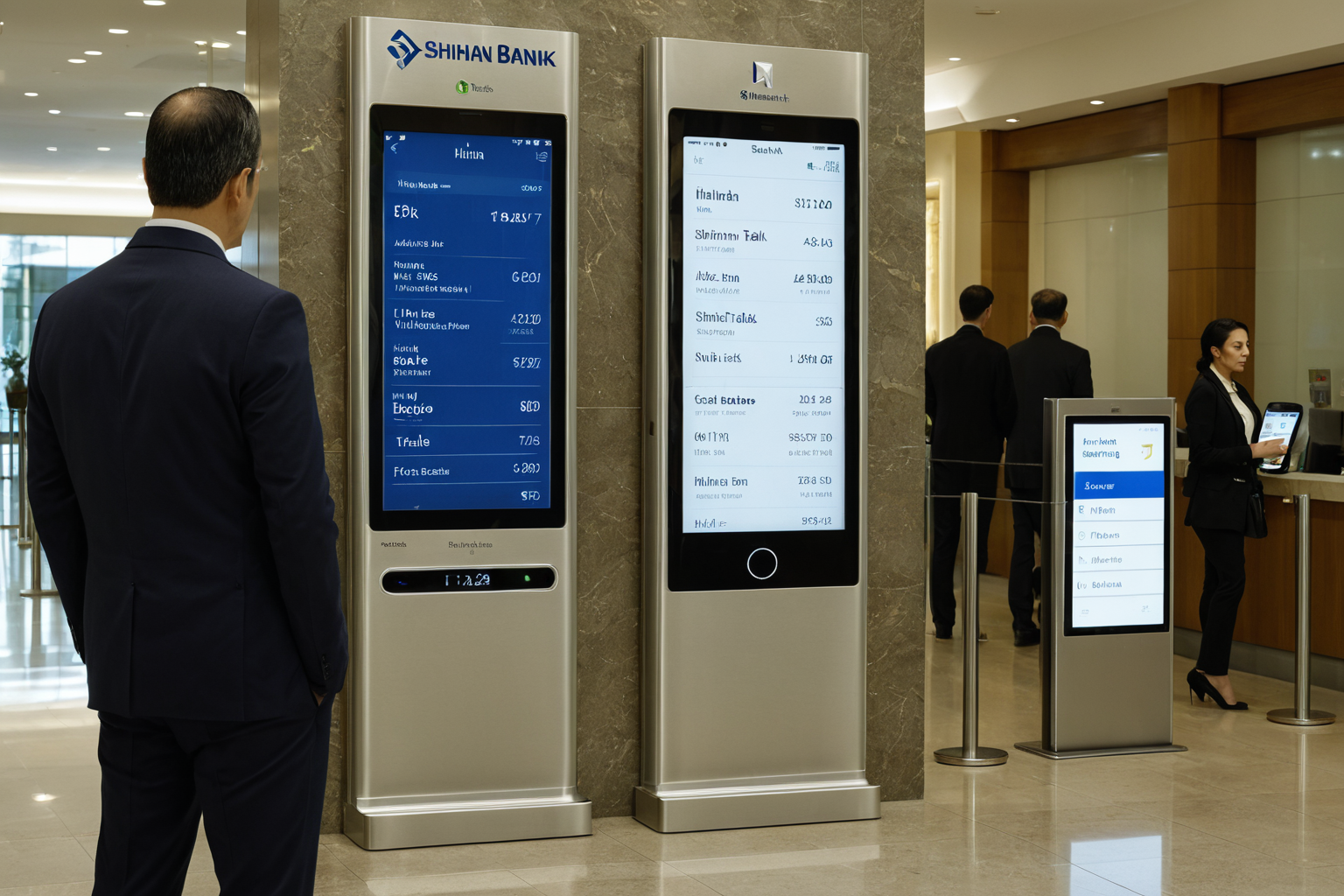
The financial unions and banks' task force (TF) has emphasized digital service improvements, such as Shinhan Bank's 'Shinhan Talk Number Table,' during discussions on normalizing operating hours. This real-time waiting guidance system is expected to reduce customer inconvenience by allowing them to anticipate wait times.
Implementation Plan and Current Status
The agreement between financial unions and banks, based on a report published in October 2025, will take effect starting April 2025. Previously, the banking sector had been exploring a 4.9-day workweek approach but now appears to be settling on a 4.5-day workweek following recent negotiations.
With KEB Hana Bank's implementation of the 4.9-day workweek stabilizing, financial unions and banks are advancing labor hour reductions through social dialogue. Some banks, like NongHyup Bank, have already implemented one-hour reduced Friday schedules, causing customer inconvenience; however, this agreement is expected to resolve such issues.
The Financial Services Commission (FSC) has stated that restoring operating hours aligns with public expectations, emphasizing the need for measures to minimize customer inconvenience alongside the 4.5-day workweek introduction.
Measures to Minimize Customer Inconvenience
Since the pandemic, bank operating hours have been shortened by one hour without returning to normal; flexible branch operations are now being used to minimize customer inconvenience. While shortened business hours initially caused inconvenience for office workers during lunch breaks, financial unions and banks are addressing this through digital transformation and improved services.
Shinhan Bank has expanded its 'Shinhan Talk Number Table' service, offering real-time waiting guidance that helps customers anticipate wait times and reduce inconvenience. Additionally, Citibank is already implementing a 35-hour workweek.
The financial unions and banks' TF plans to discuss operating hour normalization measures this week, which are being viewed as concrete steps to minimize customer inconvenience. Bank union representatives had previously advocated for lunchtime closures due to complaints from office workers, but the recent agreement is expected to resolve these issues.
Background of Past Events
The financial unions requested a 4.5-day workweek from the government after receiving a statement from the Financial Services Commission (FSC) chairman in January 2023 that restoring bank operating hours aligned with public expectations. In September 2024, labor negotiations between financial unions and banks failed to reach an agreement, raising the possibility of a general strike.
In September 2025, the financial unions urged the Ministry of Employment and Labor to support a government stance on the 4.5-day workweek. This led to the current agreement. In January 2026, banks had been discussing a 4.9-day workweek approach for practical implementation.
In October 2025, financial unions and banks announced a provisional agreement on the 4.5-day workweek and plans to implement Friday afternoon closures starting in April 2025. The details were officially confirmed on September 28, 2026.
Reasons for the Agreement
The discussion between financial unions and banks regarding a 4.5-day workweek stems from the need to adjust working hours due to changes in demand for financial services after the pandemic. The shortened operating hours caused customer inconvenience, particularly during lunch breaks for office workers.
During discussions on normalizing operating hours, the financial unions and banks' TF focused on improving digital services to minimize customer inconvenience. This led to the introduction of real-time waiting guidance systems like Shinhan Bank's 'Shinhan Talk Number Table.'
Bank union representatives had raised concerns about lunchtime closures due to office worker complaints, but this agreement is expected to resolve those issues. The government's intervention, including statements by the Financial Services Commission chair, contributed to reaching this agreement.
Response and Safety Information
The financial unions and banks' decision to shorten operating hours starting in April 2025 aims to minimize customer inconvenience through flexible branch operations. This is part of an effort to normalize the one-hour reduction in operating hours that occurred after the pandemic.
Shinhan Bank's digital service improvement, 'Shinhan Talk Number Table,' offers real-time waiting guidance, helping customers anticipate wait times and reduce inconvenience. Citibank's implementation of a 35-hour workweek is also being positively evaluated as a good example.
The financial unions and banks' TF is discussing operating hour normalization measures to minimize customer inconvenience through specific actions. This is expected to contribute to improving service quality through digital transformation in the banking sector.
Information to Verify
The agreement between financial unions and banks, based on a report published in October 2025, will take effect starting April 2025. Previously, banks had been exploring a 4.9-day workweek approach but now appear to be settling on a 4.5-day workweek following recent negotiations.
The financial unions and banks' TF plans to discuss operating hour normalization measures this week, which are being viewed as concrete steps to minimize customer inconvenience. Bank union representatives had previously advocated for lunchtime closures due to office worker complaints, but the recent agreement is expected to resolve these issues.
The Financial Services Commission has stated that restoring operating hours aligns with public expectations, emphasizing the need for measures to minimize customer inconvenience alongside the 4.5-day workweek introduction.
Frequently Asked Questions
Why are financial unions and banks implementing a 4.5-day workweek?
The implementation of a 4.5-day workweek by financial unions and banks stems from the need to adjust working hours due to changes in demand for financial services after the pandemic.
How is customer inconvenience minimized with shortened bank operating hours?
Shinhan Bank's 'Shinhan Talk Number Table' service expands real-time waiting guidance, helping customers anticipate wait times and reduce inconvenience. Flexible branch operations are also being explored to minimize customer inconvenience.
Why is the financial unions and banks' TF discussing operating hour normalization measures?
The financial unions and banks' TF is discussing operating hour normalization to address inconvenience caused by office workers during lunch breaks, which has been viewed as a concrete measure to minimize customer inconvenience.
Frequently Asked Questions
The financial unions and banks' agreement on implementing a 4.5-day workweek and adjusting operating hours aims to minimize customer inconvenience. Starting in April 2025, bank branches will open at 9:30 AM, with Shinhan Bank's digital service improvements expected to positively contribute.
Through social dialogue between financial unions and banks, labor hour reductions are being advanced, which is expected to lead to digital transformation and improved service quality in the banking sector. If flexible branch operations are effectively implemented to minimize customer inconvenience, convenience in using financial services is anticipated to improve significantly.
As emphasized by the Financial Services Commission chair, restoring operating hours aligns with public expectations, and the agreement between financial unions and banks is expected to resolve previous issues. The changes brought by the 4.5-day workweek introduction are expected to go beyond simple time adjustments, leading to customer-focused improvements in financial services.
You can view similar articles on this topic together.
View More Related ArticlesFAQ
Why are financial unions and banks implementing a 4.5-day workweek?
The implementation of a 4.5-day workweek by financial unions and banks stems from the need to adjust working hours due to changes in demand for financial services after the pandemic.
How is customer inconvenience minimized with shortened bank operating hours?
Shinhan Bank's 'Shinhan Talk Number Table' service expands real-time waiting guidance, helping customers anticipate wait times and reduce inconvenience. Flexible branch operations are also being explored to minimize customer inconvenience.
Why is the financial unions and banks' TF discussing operating hour normalization measures?
The financial unions and banks' TF is discussing operating hour normalization to address inconvenience caused by office workers during lunch breaks, which has been viewed as a concrete measure to minimize customer inconvenience.
Korean Source
This article is an English localization of a Korean-language report from BlogScore. Original: 금융노사 영업시간 단축으로 인한 고객 불편 최소화 방법