
Democratic Party Leadership Contest Debates Focus on Three Common Themes
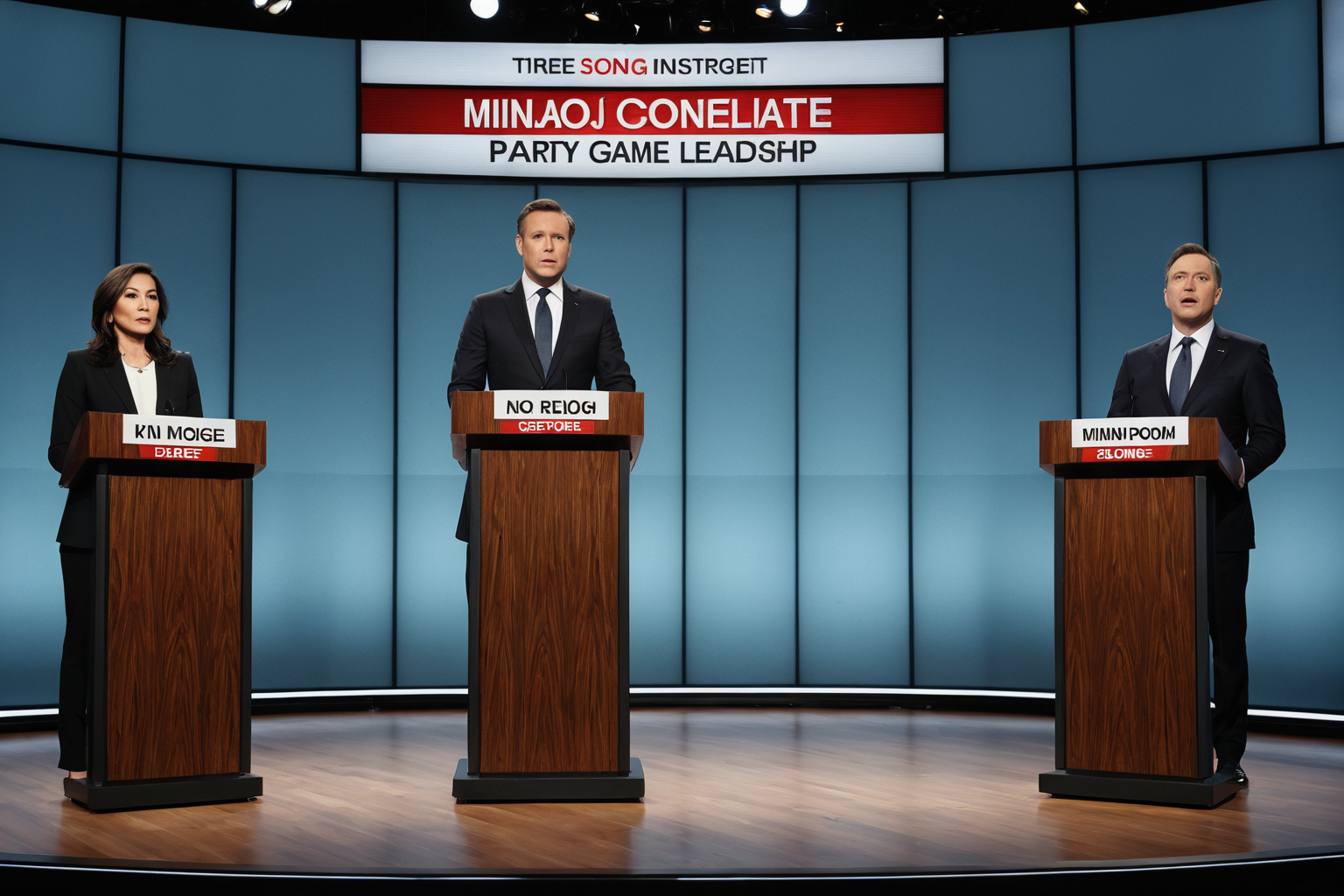
Democratic Party Leadership Contenders' TV Debates Shift Focus to Blame and Factional Rivalries
The three Democratic Party leadership contenders recently participated in a televised debate where they unanimously emphasized the success of the semiconductor cluster initiative, but instead of policy discussions, they engaged in intense exchanges blaming each other and debating responsibility. The first debate featured accusations regarding 'Shincheonji' and 'failing strategy' rhetoric, while the third debate became a pivotal moment for securing support from Honam region voters.
The Democratic Party leadership contenders' TV debates consistently addressed 'Mingcheong conflict,' 'factional rivalries,' and 'blame games.' Instead of focusing on policy discussions, they engaged in fierce exchanges over blame and responsibility toward each other. The internal party tension reached its peak with the escalation of 'Mingcheong conflict,' and during the final TV debate, contenders were seen directly clashing.
On July 30, 2026, the first TV debate saw Song Young-gil, Jeong Cheong-rae, and Kim Min-seok engage in a truth battle over 'Mingcheong conflict,' while the second debate on August 5 focused on supplementary investigation powers and Yoo Si-min related disputes. The third debate on August 10 (KBC live broadcast) was a critical moment for securing Honam region support, which would determine the outcome.
The first TV debate featured arguments about 'Shincheonji,' while the second debate saw clashes over 'criminal procedure law, Shincheonji, and betrayal theory.' The third debate intensified with the escalation of 'Mingcheong conflict,' leading to heightened internal party tension, with contenders directly clashing.
As of August 7, 2026, the Democratic Party leadership race was in a tight contest, with the 'Mingcheong conflict' intensifying and internal party tensions reaching their peak. This reflects a situation where blame games and factional rivalries overshadowed policy discussions, indicating serious internal division within the party.
Key Issues in Democratic Party Leadership Contenders' TV Debates
The three Democratic Party leadership contenders unanimously emphasized the success of the semiconductor cluster initiative during their TV debates. However, the first debate featured 'Shincheonji' accusations and 'failing strategy' rhetoric, while the second debate continued with disputes over supplementary investigation powers and Yoo Si-min.
The third debate focused on securing Honam region support as a critical turning point for determining victory. The Democratic Party's first TV debate was held on July 30, 2026, the second on August 5, and the third on August 10 via KBC live broadcast.
The Democratic Party leadership contenders' TV debates consistently addressed 'Mingcheong conflict,' 'factional rivalries,' and 'blame games.' Instead of policy discussions, they engaged in intense exchanges over blame and responsibility toward each other.
As of August 7, 2026, the Democratic Party leadership race was in a tight contest with the 'Mingcheong conflict' intensifying and internal party tensions reaching their peak. This reflects a situation where blame games and factional rivalries overshadowed policy discussions, indicating serious internal division within the party.
Causes and Context of Escalating Internal Tensions
The Democratic Party leadership contenders' TV debates consistently addressed 'Mingcheong conflict,' 'factional rivalries,' and 'blame games.' Instead of policy discussions, they engaged in intense exchanges over blame and responsibility toward each other.
On July 30, 2026, the first TV debate saw Song Young-gil, Jeong Cheong-rae, and Kim Min-seok engage in a truth battle over 'Mingcheong conflict,' while the second debate on August 5 focused on supplementary investigation powers and Yoo Si-min related disputes. The third debate on August 10 (KBC live broadcast) was a critical moment for securing Honam region support, which would determine the outcome.
The first TV debate featured arguments about 'Shincheonji,' while the second debate saw clashes over 'criminal procedure law, Shincheonji, and betrayal theory.' The third debate intensified with the escalation of 'Mingcheong conflict,' leading to heightened internal party tension, with contenders directly clashing.
As of August 7, 2026, the Democratic Party leadership race was in a tight contest, with the 'Mingcheong conflict' intensifying and internal party tensions reaching their peak. This reflects a situation where blame games and factional rivalries overshadowed policy discussions, indicating serious internal division within the party.
Political Background and Response Strategies
The Democratic Party leadership contenders' TV debates saw blame games and factional rivalries dominate over policy discussions. This issue arose from the 'Mingcheong conflict' within the Democratic Party, resulting in criticism of opponents rather than policy-focused dialogue.
The Democratic Party leadership contenders' TV debates consistently addressed 'Mingcheong conflict,' 'factional rivalries,' and 'blame games.' Instead of policy discussions, they engaged in intense exchanges over blame and responsibility toward each other.
As of August 7, 2026, the Democratic Party leadership race was in a tight contest with the 'Mingcheong conflict' intensifying and internal party tensions reaching their peak. This reflects a situation where blame games and factional rivalries overshadowed policy discussions, indicating serious internal division within the party.
Key Information to Verify
The 'Shincheonji'-related debate occurred during the first TV debate, while the second debate continued with disputes over supplementary investigation powers and Yoo Si-min. The third debate focused on securing Honam region support as a critical turning point.
The three Democratic Party leadership debates were held on July 30 (first), August 5 (second), and August 10 (third, KBC live broadcast), with each session featuring different key issues. As of August 7, 2026, the Democratic Party leadership race was in a tight contest with the 'Mingcheong conflict' intensifying and internal party tensions reaching their peak.
The Democratic Party leadership contenders' TV debates saw blame games and factional rivalries dominate over policy discussions. This issue arose from the 'Mingcheong conflict' within the Democratic Party, resulting in criticism of opponents rather than policy-focused dialogue.
Frequently Asked Questions
What was the main debate topic among Democratic Party leadership contenders during their TV debates?
The Democratic Party leadership contenders' TV debates consistently addressed 'Mingcheong conflict,' 'factional rivalries,' and 'blame games.' Instead of policy discussions, they engaged in intense exchanges over blame and responsibility toward each other.
When did the Democratic Party leadership contenders' TV debates begin?
The Democratic Party leadership contenders' TV debates began on July 30, 2026, with the second debate held on August 5, and the third on August 10 via KBC live broadcast.
When did the 'Shincheonji' debate occur during the Democratic Party leadership contenders' TV debates?
The 'Shincheonji'-related debate occurred during the first TV debate on July 30, 2026.
Frequently Asked Questions
The Democratic Party leadership contenders' TV debates saw blame games and factional rivalries dominate over policy discussions. This issue arose from the 'Mingcheong conflict' within the Democratic Party, resulting in criticism of opponents rather than policy-focused dialogue. As of August 7, 2026, the Democratic Party leadership race was in a tight contest with the 'Mingcheong conflict' intensifying and internal party tensions reaching their peak, which is expected to significantly impact the future direction of the party.
The Democratic Party leadership contenders' TV debates have shown a serious situation where blame games and factional rivalries overshadow policy discussions due to the escalation of the 'Mingcheong conflict' within the party. This indicates that internal division has become severe, with criticism directed at opponents rather than focusing on policy solutions.
You can view similar articles on this topic in one place.
View Related ArticlesFAQ
What was the main debate topic among Democratic Party leadership contenders during their TV debates?
The Democratic Party leadership contenders' TV debates consistently addressed 'Mingcheong conflict,' 'factional rivalries,' and 'blame games.' Instead of policy discussions, they engaged in intense exchanges over blame and responsibility toward each other.
When did the Democratic Party leadership contenders' TV debates begin?
The Democratic Party leadership contenders' TV debates began on July 30, 2026, with the second debate held on August 5, and the third on August 10 via KBC live broadcast.
When did the 'Shincheonji' debate occur during the Democratic Party leadership contenders' TV debates?
The 'Shincheonji'-related debate occurred during the first TV debate on July 30, 2026.
Korean Source
This article is an English localization of a Korean-language report from BlogScore. Original: 당권주자 TV토론에서 공통적으로 다룬 3가지 주제, 정확한 내용 확인