
Climate Justice March 2026: On-the-Ground Solutions to Environmental Challenges
Firsthand Experience at the September 19 Climate Justice March
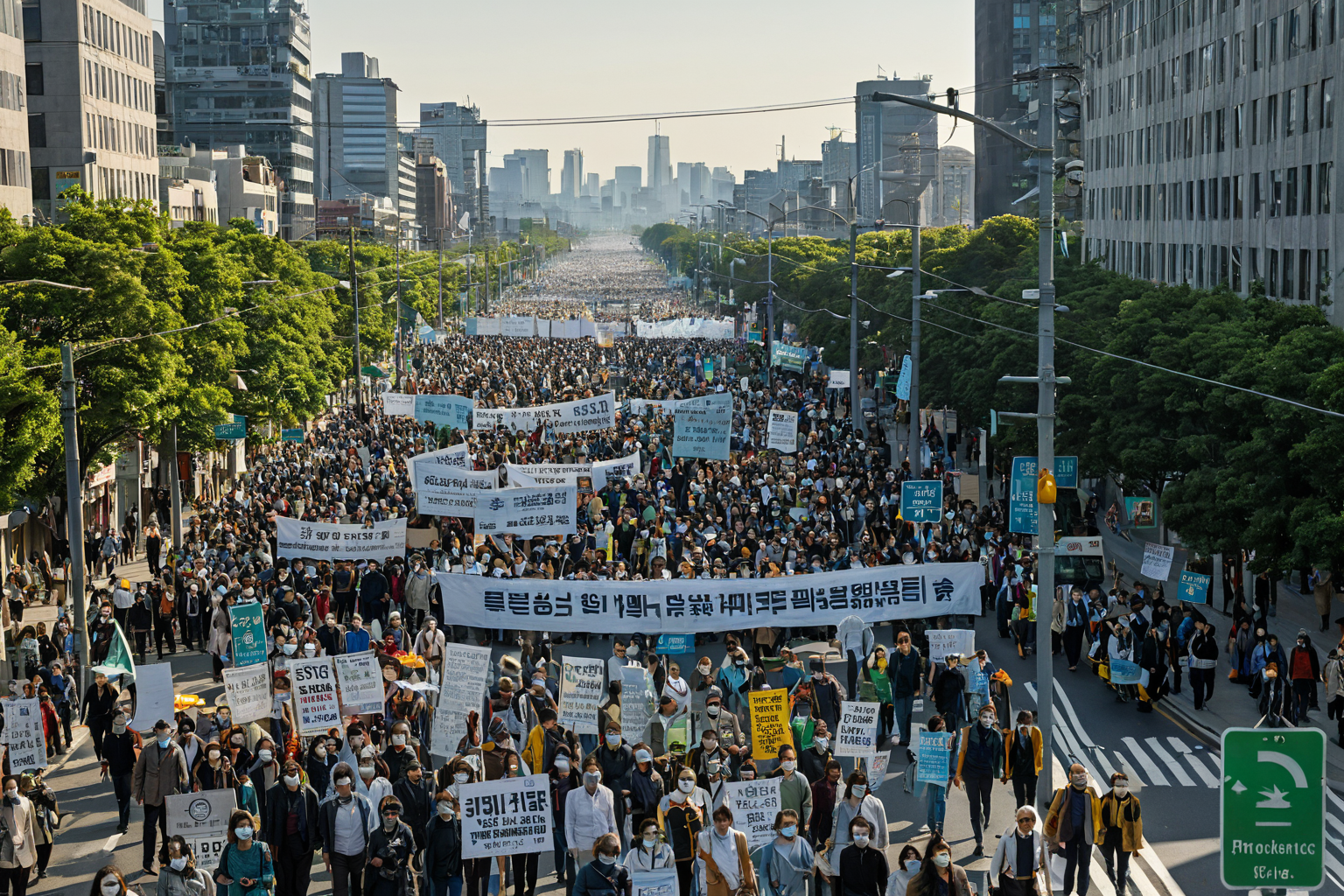
The 'September 19 Climate Justice March' held in Gwanghwamun Square, Seoul on September 19 drew 35,000 citizens participating in a large-scale civic movement urging government and parliament to address climate crisis. The main message of the march was 'Do not pass the burden of climate crisis to future generations,' accompanied by citizen actions such as lying down on Gwanghwamun Road, performances, sculptures, and interfaith worship services.
The march spread nationwide from Seoul, with Jeju Island launching its own 'Jeju Climate Justice March' under the slogan 'Stop the wildfire burning Jeju.' Gwangju also announced plans for a climate justice march on September 23.
The Climate Justice March emphasizes that addressing climate crisis must include resolving social inequality, urging the realization of climate justice with the message 'Do not pass the burden of climate crisis to future generations.'
Key Demands of the Climate Justice March
The '11 Demands for Climate Justice' submitted to Daejeon City centered on halting regional sacrifice and stopping mega-projects. Daejeon City argued that achieving climate justice requires an integrated approach combining ecological protection with addressing social inequality.
Chungnam environmental groups requested halting the construction of Seoul's power transmission network, advocating for a transition to energy decentralization. This was seen as a concrete solution considering both climate crisis response and social inequality resolution.
Korea Environmental Movement Alliance announced related activities in its August environmental activity report, emphasizing that addressing climate crisis should be approached through practicing 'climate justice.'
Details of Activities at the March Site
The September 19 march in Gwanghwamun included performances, sculptures, and interfaith worship services. Citizens chanted slogans like 'Do not pass the burden of climate crisis to future generations,' urging government and parliament to take action on climate issues.
Local movements against transmission towers in Hongseong County and energy decentralization were also addressed, seen as concrete actions for ecological protection that connect climate justice with local residents' lives.
The Climate Justice March emphasized that addressing climate crisis must include resolving social inequality, arguing that climate crisis should be recognized as 'one's own problem' requiring response.
Core Principles of Climate Justice
Climate justice demands an integrated approach combining environmental issues with resolving social inequality. Climate crisis is linked to industrial pollution and environmental problems, requiring recognition of it as 'one's own problem.'
The '11 Demands for Climate Justice' submitted to Daejeon City include halting regional sacrifice and stopping mega-projects, representing concrete measures considering social inequality in climate crisis response.
The Climate Justice March emphasized the message 'Do not pass the burden of climate crisis to future generations,' stressing that addressing climate crisis must include resolving social inequality, arguing that climate crisis response should be approached as a shared responsibility of society as a whole.
Daejeon City's Demands and Ecological Protection
The '11 Demands for Climate Justice' submitted to Daejeon City on September 14 centered on halting regional sacrifice and stopping mega-projects, representing an approach considering both ecological protection of local residents and social inequality issues.
Chungnam environmental groups requested halting construction of the Seoul power transmission network, advocating for a transition to energy decentralization. This was evaluated as a concrete solution connecting climate crisis response with regional ecological protection.
Korea Environmental Movement Alliance introduced activities related to the Climate Justice March in its August environmental activity report, emphasizing that addressing climate crisis must include resolving social inequality. This indicates that climate justice should be approached as a shared responsibility of society as a whole, not just an environmental issue.
Historical Significance of the Climate Justice March
The September 19 Climate Justice March became a nationwide civic movement that first popularized addressing social inequality in climate crisis response. It broadened public understanding that climate issues are not just environmental problems but shared responsibilities of society as a whole.
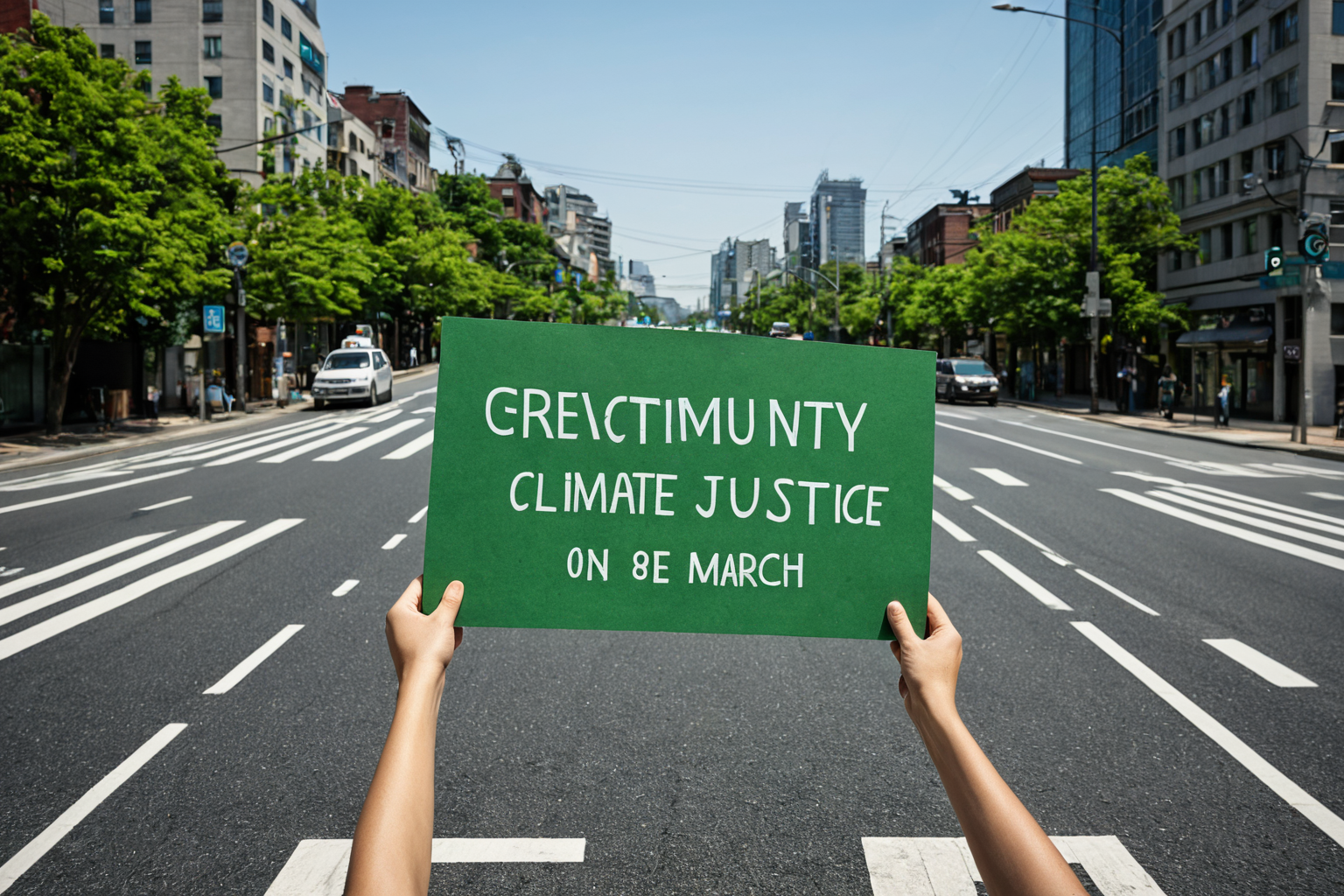
Citizens lying down on Gwanghwamun Road directly expressed the message 'Do not pass the burden of climate crisis to future generations,' sending a strong signal to government and parliament urging action. This positioned the Climate Justice March not merely as a civic movement but as an important catalyst for social change.
Marches held in Jeju and Gwangju, reflecting local characteristics and issues, were noted as examples exploring how to implement climate justice at regional levels. This demonstrated that climate justice should develop with local communities rather than being treated as solely national-level response.
Future Direction of the Climate Justice March
The September 19 Climate Justice March emphasized that practicing 'climate justice' is essential in addressing climate crisis, arguing that government and local communities must work together to solve climate issues. This presented a comprehensive approach going beyond simple environmental problem-solving to include resolving social inequality.
Going forward, the Climate Justice March will continue exploring concrete solutions reflecting regional characteristics and issues while emphasizing the need to consider social inequality in climate crisis response. It is expected to contribute to spreading awareness that climate issues are not just environmental problems but shared responsibilities of society as a whole.
Verified Information
The September 19 Climate Justice March began on September 19, 2026 in Gwanghwamun Square, Seoul and spread nationwide including Jeju and Gwangju. The main message was 'Do not pass the burden of climate crisis to future generations,' with 35,000 citizens participating to urge government and parliament to address climate crisis.
The '11 Demands for Climate Justice' submitted to Daejeon City included halting regional sacrifice and stopping mega-projects. Chungnam environmental groups requested halting construction of the Seoul power transmission network, advocating for energy decentralization. This was evaluated as a concrete solution considering both climate crisis response and social inequality resolution.
The Climate Justice March emphasized that addressing climate issues must include resolving social inequality, arguing that climate crisis should be recognized as 'one's own problem.' This broadened public understanding that climate issues are not just environmental problems but shared responsibilities of society as a whole.
Frequently Asked Questions
What was the main message of the Climate Justice March?
The main message was 'Do not pass the burden of climate crisis to future generations,' urging government and parliament to address climate crisis while emphasizing climate justice.
What were the key demands presented at the Climate Justice March?
The '11 Demands for Climate Justice' submitted to Daejeon City included halting regional sacrifice and stopping mega-projects. Additionally, Chungnam environmental groups requested halting construction of the Seoul power transmission network while advocating for energy decentralization.
How does the Climate Justice March contribute to resolving climate issues?
The Climate Justice March emphasizes that addressing climate crisis must include resolving social inequality, arguing that climate crisis should be recognized as 'one's own problem.' This contributes to spreading awareness that climate issues are not just environmental problems but shared responsibilities of society as a whole.
Frequently Asked Questions
The September 19 Climate Justice March was a large-scale civic movement with 35,000 citizens demanding government and parliament address climate crisis through the message 'Do not pass the burden of climate crisis to future generations.' The march emphasized that addressing climate issues must include resolving social inequality, presenting concrete solutions for realizing climate justice.
The Climate Justice March spread nationwide as a civic movement exploring concrete solutions reflecting local characteristics and issues. This contributed to broadening public understanding that climate issues are not just environmental problems but shared responsibilities of society as a whole, indicating the need for comprehensive approaches considering social inequality in future climate crisis responses.
You can view similar articles on this topic together.
View Related ArticlesFAQ
What was the main message of the Climate Justice March?
The main message was 'Do not pass the burden of climate crisis to future generations,' urging government and parliament to address climate crisis while emphasizing climate justice.
What were the key demands presented at the Climate Justice March?
The '11 Demands for Climate Justice' submitted to Daejeon City included halting regional sacrifice and stopping mega-projects. Additionally, Chungnam environmental groups requested halting construction of the Seoul power transmission network while advocating for energy decentralization.
How does the Climate Justice March contribute to resolving climate issues?
The Climate Justice March emphasizes that addressing climate crisis must include resolving social inequality, arguing that climate crisis should be recognized as 'one's own problem.' This contributes to spreading awareness that climate issues are not just environmental problems but shared responsibilities of society as a whole.
Korean Source
This article is an English localization of a Korean-language report from BlogScore. Original: 919 기후정의행진 현장에서 본 환경 문제 해결 방안