
Blog Automation Guide: Creating Essential Pages for Trust and SEO
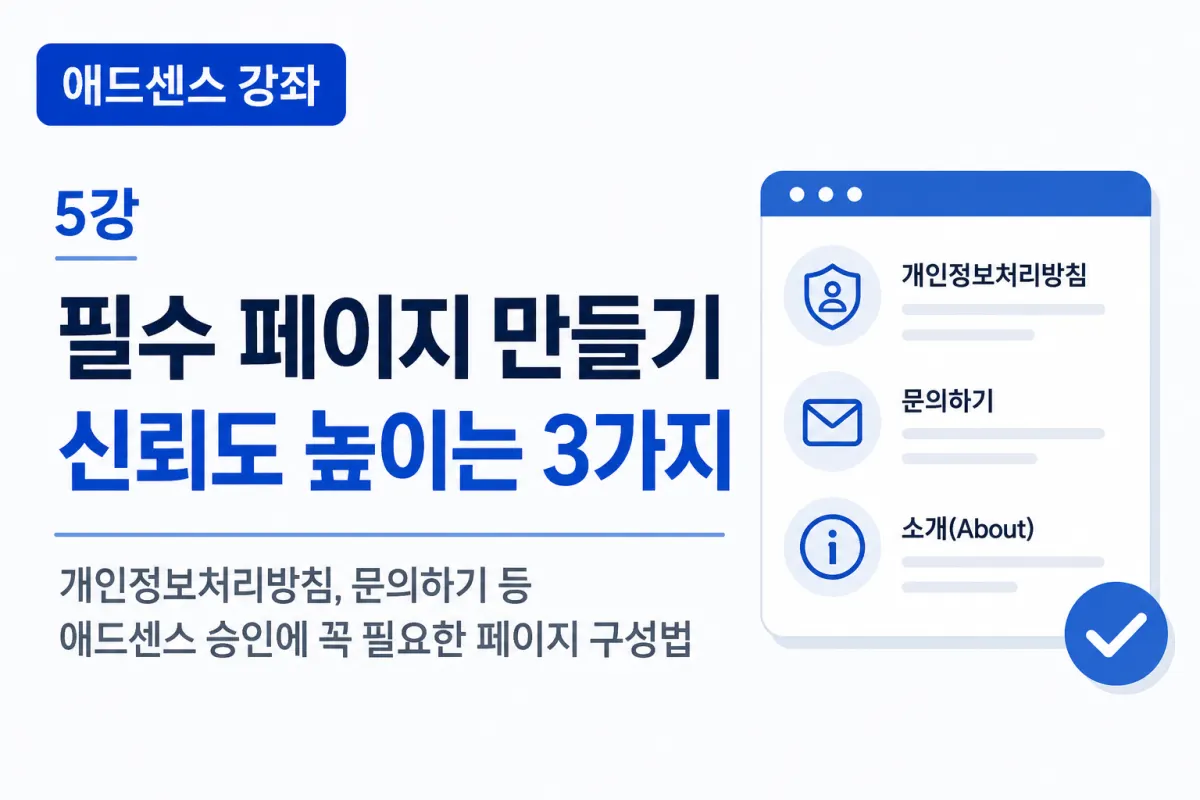
Why Are Essential Pages Important?
When starting a new blog, most people begin by writing content.
While content is crucial, Google tends to rate sites with clear and trustworthy management higher than those that only have posts.
Visitors also feel the same way.
A site without contact information,
no clarity on who runs it,
and no privacy guidelines is hard to trust.
This is why preparing essential pages in advance is recommended.
The First Pages You Should Create
If you're preparing for Google AdSense, at least create these three pages:
About
Contact
Privacy Policy
These three are standard on nearly all legitimate websites.
About Page
The About page tells visitors what your blog is about.
You don't need to write a lengthy post.
Including the following will suffice:
Blog purpose
Topics covered
Information provided for readers
Mission or direction
For example:
This blog explains WordPress, AdSense, and SEO topics in simple terms. It focuses on practical content that beginners can follow.
A short description like this is enough.
Contact Page
The Contact page is also important.
Visitors should have a way to reach the blog owner.
You can offer:
Email address
Contact form
Available social media links
At first, having just an email is sufficient.
No need to add complex features yet.
Privacy Policy
Many beginners find this page challenging.
However, it's not as difficult as it seems.
A Privacy Policy explains:
What information your site collects,
How that data is used.
If you plan to use Google AdSense, having a Privacy Policy is especially important.
Cookies Notice Is Also Required
Google AdSense uses cookies.
Therefore, your Privacy Policy should also mention this.
For example:
Cookies usage
Personalized ads
Ability to block cookies via browser settings
Include these points in your policy.
Pages Are Different from Posts
In WordPress, there are two types of content:
Posts (for articles)
Pages (for static information)
About,
Contact,
and Privacy Policy should all be created as Pages.
Unlike posts, pages don't sort by date, so they'll always appear in a fixed location for visitors.
Add Them to Your Menu
After creating essential pages, link them in your menu.
A recommended menu structure is:
Home
About
Contact
Privacy Policy
A clean layout helps visitors find what they need quickly.
How Much Should You Share as the Owner?
You don't have to share your real name.
Using a nickname is fine.
The key is to give readers the sense that this is a real, active blog.
<A brief self-introduction is enough.
Create an Email Address for Contact
On your Contact page, use a working email address.
You might receive:
Ad-related inquiries
Error reports
Collaboration requests
A free email service is sufficient for this purpose.
Common Mistakes to Avoid
When preparing for AdSense, common mistakes include:
No About page
No contact method listed
No Privacy Policy
Pages not linked in the menu
Creating empty pages without content
It's important to create essential pages and write them properly.
More Pages Don't Mean Better
You can also create additional pages like:
FAQ,
Ad guidelines,
Sponsorship,
Terms of Service.
However, before getting AdSense approval, don't overdo it.
Focus on having a clean, well-organized site with just the necessary information.
Think from Your Visitor's Perspective
Imagine visiting your blog for the first time.
You wouldn't know:
Who runs it,
How to contact them,
Or how their data is handled.
If there's no information, trust becomes hard to establish.
Google evaluates sites from this same perspective.
Building a trustworthy site is the most important step for AdSense approval and long-term success.
What's Next in This Series?
Now that your blog structure is complete,
The next critical step is selecting your blog topic and category organization.
Your choice of topic affects not only AdSense approval but also future search traffic and revenue potential.
In the next lesson, we'll cover how to choose a topic that supports both AdSense approval and strong SEO performance.
Key Takeaways
Let's summarize what you've learned today:
The About page explains your blog's purpose.
The Contact page provides a way to reach you.
The Privacy Policy is essential for building trust.
Create these as Pages, not Posts, in WordPress.
Link them in your menu for easy access.
A trustworthy blog increases your chances of AdSense approval.
You've now completed the essential trust elements for your blog.
In the next lesson, we'll explore how to select a topic and organize categories that align with both AdSense approval and SEO success.
FAQ
Why is a Privacy Policy important for my blog?
A Privacy Policy explains how your site collects and uses visitor data, which builds trust with readers and is required by Google AdSense.
Should I use my real name on the About page?
No, you can use a nickname. The key is to provide enough information to make the blog feel authentic without sharing personal details.
Korean Source
This article is an English localization of a Korean-language report from BlogScore. Original: [블로그 자동화] 5강. 개인정보처리방침, 문의하기 등 필수 페이지 만들기