
Black Hole HD 1080p: Scientific Explanation and Real Observations
The Historical Milestones in Black Hole Observation
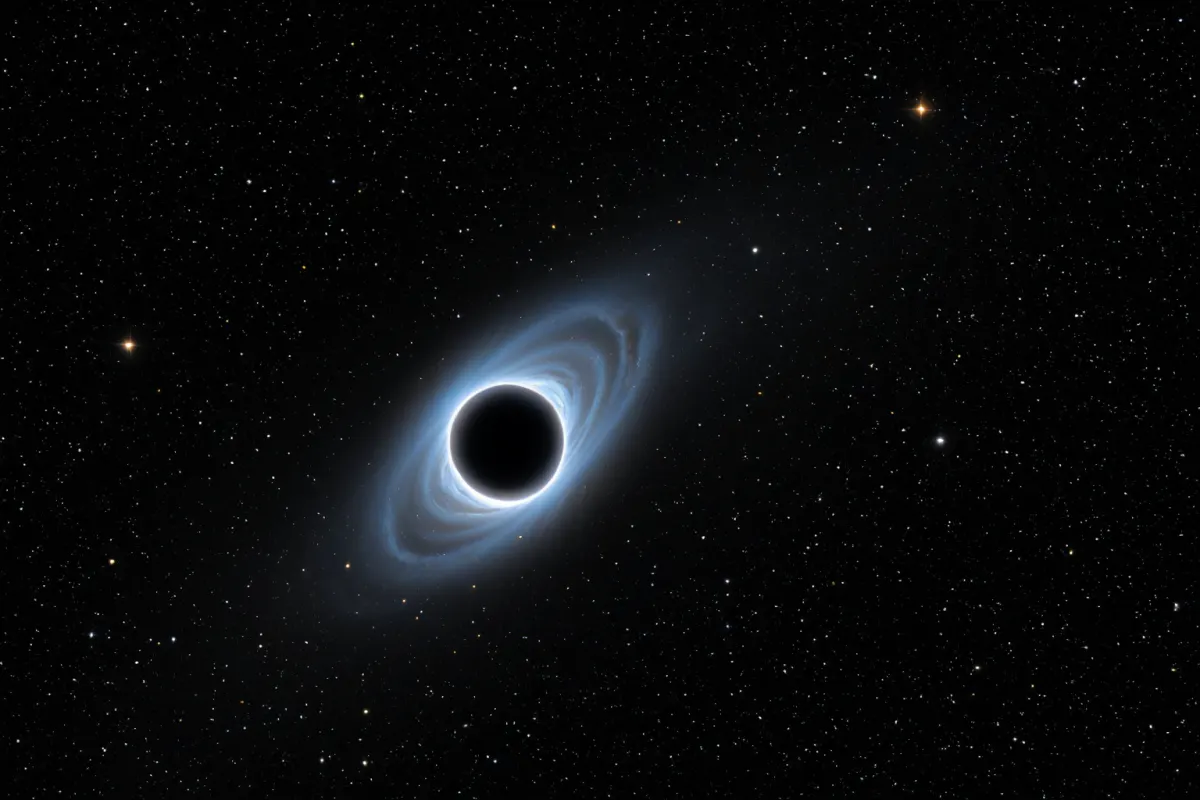
Since humanity first unveiled a black hole image in 2019, significant progress has been made, including the actual imaging of our galaxy's central black hole in 2022 and the highest-resolution observation of M87* in 2024. These achievements have not only validated Einstein's general relativity predictions but also laid a scientific foundation for the theoretical possibility of space-time travel.
The Technical Evolution of Black Hole Observation
On April 12, 2019, the Event Horizon Telescope (EHT) project unveiled the first image of M87* black hole. The observed image showed a donut-like shape, consistent with Einstein's theoretical prediction about the spacetime structure around black holes. However, the initial images were low-resolution and appeared blurry.
On May 12, 2022, the EHT project released the first actual image of our galaxy's central black hole (Sgr A*). This marked the first time humanity observed the appearance of a black hole at the center of our Milky Way, reinforcing scientific understanding supported by Einstein's theory.
On August 29, 2024, M87* was observed with unprecedented resolution. The EHT project captured fine structures around the black hole using advanced high-resolution data processing techniques, marking a new stage in black hole research.
Observing Black Hole Pairs and Future Scientific Implications
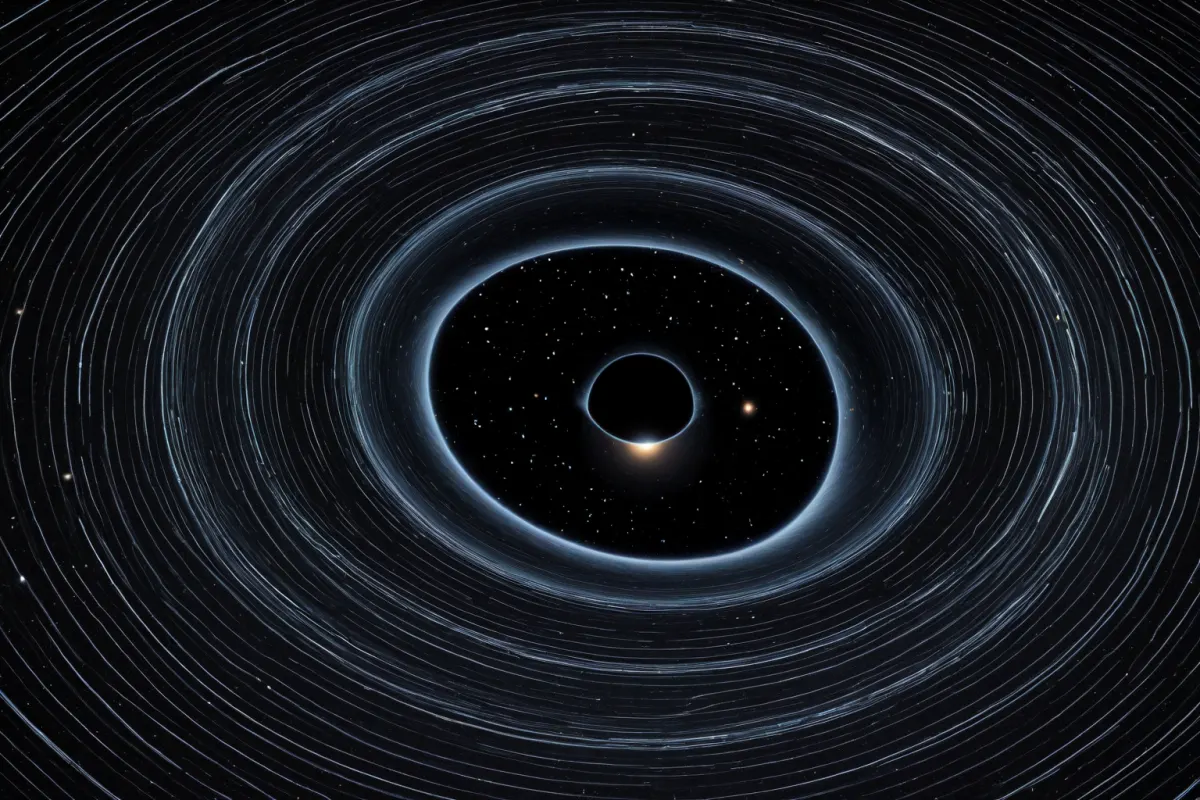
On November 11, 2025, astronomers successfully captured the first images of two black holes orbiting each other. This breakthrough resolved a scientific mystery that had remained unsolved for 40 years, offering new insights into black hole interactions and cosmic structure formation.
These observational achievements represent ongoing validation of Einstein's general relativity predictions over more than a century. The observation of spacetime ripples around black holes has been particularly significant in confirming the accuracy of this theory.
The resolution of black hole images continues to improve with technological advancements, and AI technology now enables even clearer image production. Since the first observation in 2019, black hole research has become more refined, including discoveries such as a massive black hole with a mass 6.5 billion times that of our Sun.
Black Holes and the Possibility of Space-Time Travel
The concept of space-time travel, often explored in science fiction like *Interstellar*, has gained prominence in black hole research. Observing the spacetime structure around black holes has provided a scientific basis for theoretically possible space-time travel.
The high-resolution observations from 2024 have contributed to analyzing fine structures around black holes, which is expected to become important data for future space-time travel research. However, space-time travel remains in the theoretical stage, and further research is needed to assess its practical feasibility.
Black holes are celestial bodies that even swallow light, and understanding their properties through observation has become increasingly precise. This contributes not only to cosmological research but also influences humanity's direction for future space exploration.
The Development of Black Hole Observation Technology and Future Outlook
The Event Horizon Telescope (EHT) project is a multinational collaboration involving global astronomers who collect and process data for black hole observation. Since 2019, EHT technology has focused on improving resolution, enabling more detailed analysis of black hole structures.
The 2024 M87* observation and the 2025 discovery of orbiting black holes represent successful expansions of the EHT project. These achievements will further deepen our understanding of cosmic structure and evolution through even higher-resolution data in future astronomical research.
Black hole research goes beyond exploring the properties of black holes themselves; it contributes to understanding the overall structure and evolution of the universe. This provides a crucial foundation for humanity's deeper understanding of space and the development of future space exploration plans.
Key Facts About Black Hole Observations
April 12, 2019: First image of M87* black hole unveiled
May 12, 2022: First actual image captured of our galaxy's central black hole (Sgr A*)
August 29, 2024: Highest-resolution observation of M87* achieved
November 11, 2025: First successful imaging of orbiting black holes, resolving a 40-year-old scientific mystery
The observation of spacetime ripples around black holes has been a key validation of Einstein's general relativity predictions, which have undergone over a century of scientific verification.
Clarifications Needed
The term 'Black Hole HD 1080p' is often confused with standard video quality. In reality, the observed images are created through high-resolution data processing technology. As explained by Donga Science, this represents technological progress aimed at improving resolution.
The 2025 observation of orbiting black holes serves as an example for future scientific research directions, offering new insights into black hole interactions and cosmic structure formation. This will become a crucial foundation for future astronomical research.
Humanity's black hole observations have steadily advanced since the EHT project began in 2019, validating Einstein's theory while also laying the groundwork for future scientific research.
Frequently Asked Questions
How has black hole observation impacted humanity's scientific understanding?
Through black hole observations, humanity has validated Einstein's general relativity predictions, providing new insights into spacetime structure and the evolution of the universe.
Why do early black hole images appear blurry?
The initial images had low resolution due to technological limitations, but subsequent advancements in high-resolution data processing have made the images clearer.
What is the significance of discovering orbiting black holes?
The first observation of two black holes orbiting each other resolved a 40-year-old scientific mystery and provided new research opportunities regarding black hole interactions and cosmic structure formation.
Frequently Asked Questions
Humanity's black hole observations have steadily advanced since the first image was unveiled in 2019, with annual progress. These achievements validate Einstein's theory while also laying a scientific foundation for space-time travel possibilities. The 2025 observation of orbiting black holes is an example that shows future research directions in astronomy, and further innovative developments are expected.
Black hole research extends beyond studying black holes themselves; it contributes to understanding the overall structure and evolution of the universe. This provides a crucial foundation for humanity's deeper understanding of space and the development of future space exploration plans.
In future astronomical research, higher-resolution data combined with AI technology will enable more precise analysis of black hole structures, expanding scientific foundations for concepts like space-time travel explored in science fiction.
These achievements are the result of the EHT project and multinational collaboration, representing a case where humanity has collectively achieved scientific success.
You can view similar articles all at once.
View Related ArticlesFAQ
How has black hole observation impacted humanity's scientific understanding?
Through black hole observations, humanity has validated Einstein's general relativity predictions, providing new insights into spacetime structure and the evolution of the universe.
Why do early black hole images appear blurry?
The initial images had low resolution due to technological limitations, but subsequent advancements in high-resolution data processing have made the images clearer.
What is the significance of discovering orbiting black holes?
The first observation of two black holes orbiting each other resolved a 40-year-old scientific mystery and provided new research opportunities regarding black hole interactions and cosmic structure formation.
Korean Source
This article is an English localization of a Korean-language report from BlogScore. Original: 블랙홀 HD 1080p 사진으로 보는 과학적 설명과 실제 현상