
Black Hole HD 1080p Photo: Scientific Explanation of How It Was Captured
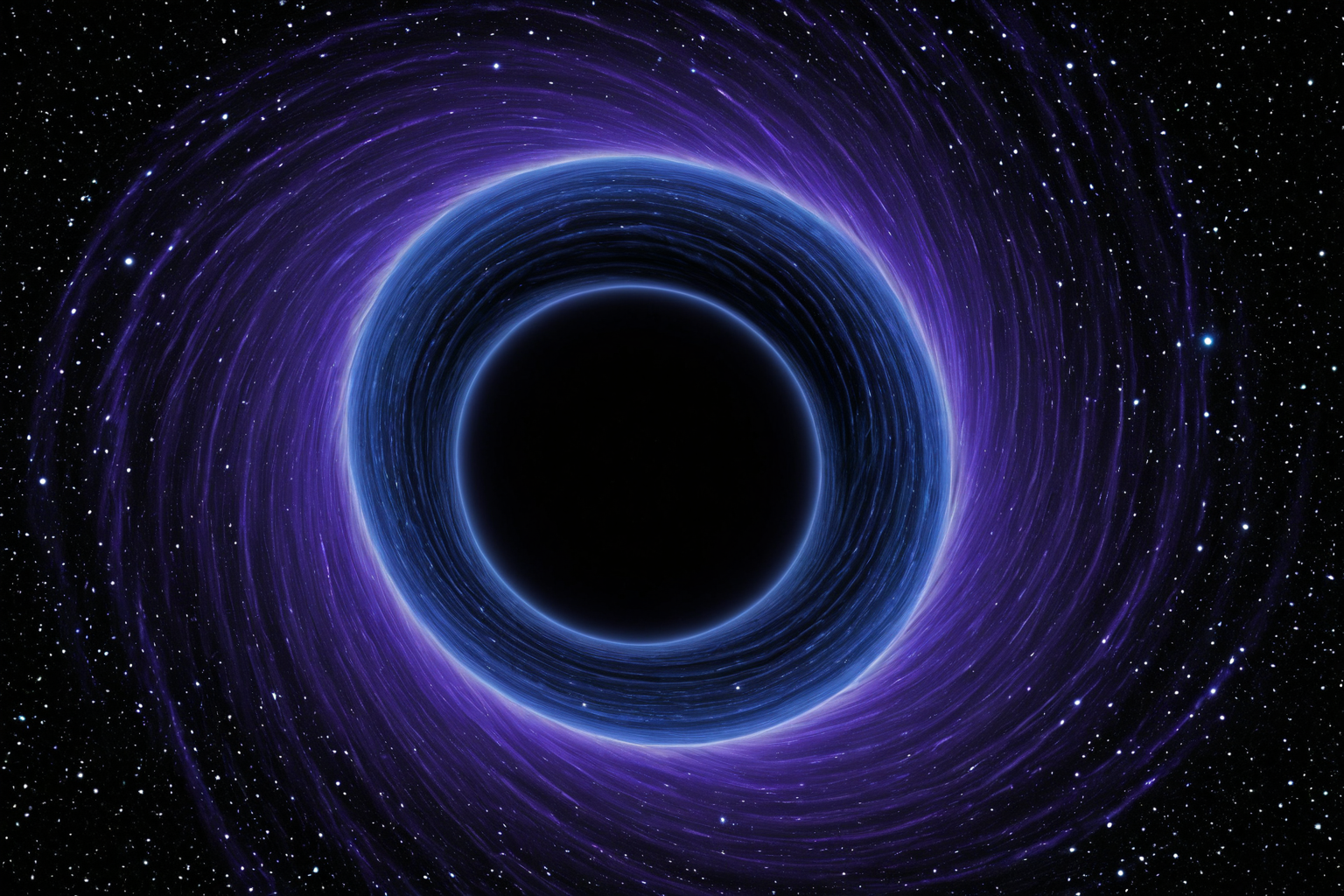
The Process of Capturing Black Hole Images
The first image of a black hole was released in April 2019. This result came from global observatories collaborating to analyze radio wave data, creating a scientific reconstruction rather than a direct visual image.
Scientific Significance of Black Hole Images
Black holes are celestial bodies that absorb even light. The images were created by analyzing the shadow and light emitted by surrounding matter. The first publicized image in 2019 showed M87's supermassive black hole, providing crucial evidence supporting Einstein's general relativity theory.
History of Black Hole Observation
Following the April 2019 release of the first black hole image, the center of our galaxy's black hole was revealed for the first time in May 2022. This achievement resulted from global scientists collaborating through the 'Event Horizon Telescope' (EHT) project.
One notable contributor to black hole imaging is Katie Bouman, a female scientist in her twenties who contributed to developing algorithms for generating black hole images. However, it's important to note that all black hole images remain reconstructions from data analysis, not direct HD 1080p visuals.
Advancements in Black Hole Observation Technology
Black hole observations use radio waves through a global network of telescopes called the Event Horizon Telescope (EHT) project. EHT involves multiple observatories worldwide collaborating to collect and analyze data.
The M87 black hole image captured in April 2019 was released that same month, with researchers later announcing their next goal: filming a video of a black hole. This will require more precise observation technology and improved data processing algorithms.
How Black Hole Images Are Created
Black hole images are not direct photographs but visualizations derived from analyzing radio wave data. By observing light emitted around the black hole, scientists tracked its shadow and surrounding matter patterns through scientific reconstruction based on radio wave data.
The first public release of an image showing our galaxy's central black hole occurred on May 13, 2022, contributing to verifying Einstein's theory of relativity. In August 2022, the M87* black hole was observed at its highest resolution to date.
The Future of Black Hole Research
Scientists aim to capture video footage of black holes, requiring expansion of radio telescope networks and improvements in data processing technology. As of August 2024, black hole observations are becoming increasingly precise.
A recent discovery captured jets traveling five times faster than light near a black hole, aiding our understanding of their physical properties. However, it's crucial to remember that all black hole images remain scientific reconstructions rather than direct visual representations, making terms like 'HD 1080p' inaccurate descriptions.
Key Milestones in Black Hole Observation
Major events include the first black hole image release in April 2019, the May 2022 announcement of our galaxy's central black hole observation, and the August 2024 record-high resolution observation of M87*. All these milestones were achieved through global scientific collaboration.
Importance of Black Hole Research
Black hole research contributes to fundamental understanding in cosmology and physics. It verifies Einstein's theory of relativity while helping us understand extreme environmental characteristics occurring near black holes.
Common Misunderstandings About Black Hole Images
The claim that black hole images were 'captured in HD 1080p' is inaccurate. Actual observations involve analyzing radio wave data, and visual resolution does not apply to these reconstructions. This misconception likely stems from simplified explanations during science communication.
Current State of Black Hole Research
Black hole observation continues to become more precise, with M87* black hole observed at record-high resolution in August 2024. This represents the achievement of global scientists working together through the 'Global Scientific Team' (commonly referred to as 'Earth's Special Forces' in Korean media) project.
Future Goals for Black Hole Research
Scientists are targeting black hole video capture as their next goal. This requires expanding radio telescope networks and improving data processing technology, which is currently in the research phase as of 2024.
Technical Limitations in Black Hole Observation
Black hole observations rely on radio waves through a global network of telescopes. Since black holes themselves emit no light, observation must focus on their interaction with surrounding matter.
Public Understanding of Black Hole Research
A common misunderstanding is the 'HD 1080p' description for black hole images. In reality, these are data reconstructions without direct visual resolution. This misconception arises from simplified explanations during science communication efforts.
Frequently Asked Questions
How are black hole images captured?
Black hole images are scientific reconstructions based on analyzing radio wave data, not direct visual representations. Scientists observe light emitted by surrounding matter to track the shadow and patterns around the black hole.
What is the resolution of black hole images?
The term 'HD 1080p' does not accurately describe black hole images. Actual observations are data reconstructions with no direct visual resolution, making such quality descriptions misleading.
When were black hole images first released?
The first black hole image was publicly released in April 2019. Subsequently, the first view of our galaxy's central black hole was captured and announced in May 2022.
You can explore more articles on similar topics.
View Related ArticlesFAQ
How are black hole images captured?
Black hole images are scientific reconstructions based on analyzing radio wave data, not direct visual representations. Scientists observe light emitted by surrounding matter to track the shadow and patterns around the black hole.
What is the resolution of black hole images?
The term 'HD 1080p' does not accurately describe black hole images. Actual observations are data reconstructions with no direct visual resolution, making such quality descriptions misleading.
When were black hole images first released?
The first black hole image was publicly released in April 2019. Subsequently, the first view of our galaxy's central black hole was captured and announced in May 2022.
Korean Source
This article is an English localization of a Korean-language report from BlogScore. Original: 블랙홀 HD 1080p 사진 과학적 해설: 어떻게 촬영했는지