
Bill Gates' Visit to South Korea Highlights Global SMR Technology Trends

Bill Gates' Visit to South Korea: Accelerating SMR Collaboration
Bill Gates visited South Korea on August 13, 2026, to discuss collaboration on Small Modular Reactor (SMR) technology with government and business leaders. This move aligns with a key strategy to address increasing AI power demand, following Terapower's recent approval for commercial SMRs in the U.S.
During his visit, Gates met with key figures including Chairperson of Samsung Group Lee Jae-yong and President of SK Group Kim Ki-seon to discuss SMR development and market entry strategies. Notably, it was confirmed that Terapower has acquired South Korean nuclear technology after securing the first commercial SMR approval in the U.S., marking a new indicator in global energy competition.
Key Trends in SMR Technology Collaboration
Gates' visit strengthened global collaboration in the SMR sector. He worked with Terapower to build partnerships with major South Korean companies like HD Hyundai, SK Innovation, and Doosan to enhance competitiveness in the U.S. market.
Terapower received commercial SMR approval from the U.S. in March 2026, followed by reports of acquiring South Korean nuclear technology in May. This led SK Innovation to express support for Terapower's global expansion and Hyundai Engineering securing priority rights for eight EPC (Engineering, Procurement, Construction) projects.
Competition Between SMR and Solid-State Batteries
As SMR technology emerges as a key solution for meeting AI power demand, competition with solid-state batteries in the energy dominance race has intensified. Reports from January 2026 indicate this rivalry is expanding, signaling increasingly fierce competition for leadership in future energy markets.
Terapower's U.S. commercial SMR approval was widely seen as validating the technology's practical viability, boosting South Korea's technological standing globally. This development also positions Korean technology to compete effectively against solid-state battery advancements.
Cross-Sector Collaboration and Stock Market Impact
Following news of Gates' visit, stocks related to nuclear power saw a surge. On August 13, 2026, shortly after reports of Gates meeting with government and business leaders, nuclear-related shares rose sharply, with Woori Technology experiencing a pre-visit surge followed by a correction.
This market movement reflects the significance of SMR collaboration, driven by expectations that government and businesses will increase investment in SMR development. Additionally, the deepening partnership between Gates and Lee Jae-yong positions them as key players in AI power solutions.
U.S. Market Entry and Global Competition
After securing U.S. commercial SMR approval, Terapower acquired South Korean nuclear technology to strengthen its global market position. This strategy aligns with Terapower's focus on sodium-based SMR projects, collaborating with companies like HD Hyundai and SK Innovation to secure a foothold in the U.S. market.
Notably, Doosan, SK Group, and HD Hyundai are actively moving to enter the U.S. SMR market, with Hyundai Engineering securing priority rights for eight EPC projects. These efforts demonstrate South Korean companies' ambition to lead in global competition as SMR technology gains worldwide attention.
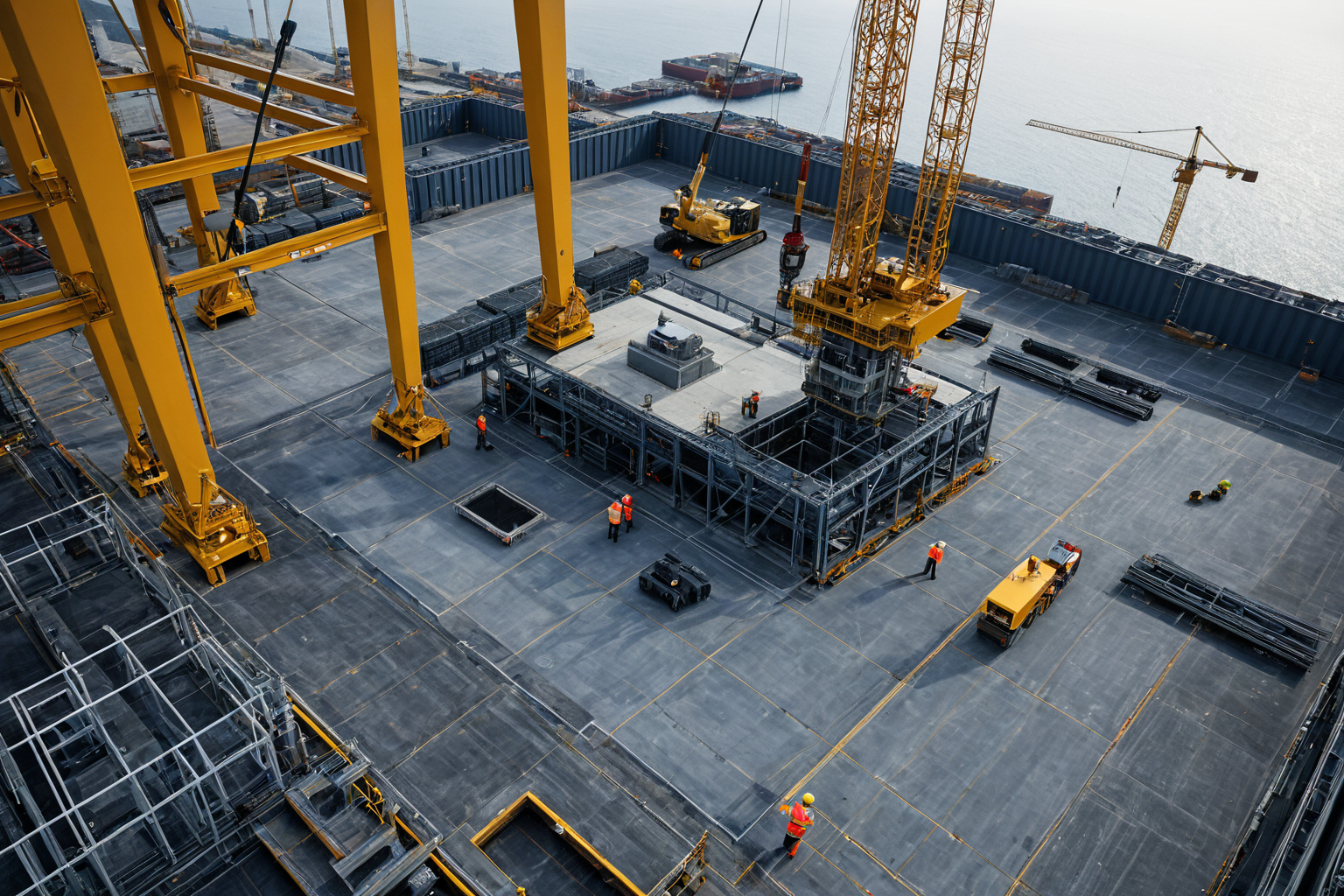
Global Expansion of SMR Technology
Gates' visit emphasized the competitive landscape for SMR collaboration on a global scale. Through discussions with government and business leaders, he highlighted SMR development as a key solution to address AI power shortages, drawing parallels to the 'foundry' era in semiconductors where technological leadership is fiercely contested.
Terapower's U.S. commercial SMR approval, achieved through collaboration with Gates, was widely seen as validating South Korea's nuclear technology for global export. This success has also prompted companies like KCC Silicon to intensify efforts in the European market at events such as 'In-Cosmetics Global 2026.'
Future Outlook on SMR vs. Solid-State Battery Competition
As SMR technology rises as a critical solution for increasing AI power demand, competition with solid-state batteries is intensifying. Reports from January 2026 indicate this rivalry will expand further, signaling an increasingly fierce battle for leadership in future energy markets.
Terapower's U.S. commercial SMR approval validates the technology's feasibility and enhances South Korea's global technological standing. This development also positions Korean technology to compete effectively against solid-state battery advancements in the broader energy market.
Expansion of SMR Collaboration and Future Prospects
Gates' visit served as a pivotal moment for global entry into the energy market through SMR collaboration. The increased investment expectations from government and business sectors, particularly following Terapower's U.S. commercial SMR approval, have driven this momentum.
Looking ahead, competition between SMR and solid-state batteries is expected to intensify further, positioning it as a key strategic focus for South Korean companies aiming to lead in global competition. Terapower's U.S. SMR approval and acquisition of South Korean nuclear technology are seen as significant milestones demonstrating the success of this strategy.
Key Information to Verify
As news of Gates' visit unfolds, attention should be paid to whether Terapower has indeed received U.S. commercial SMR approval and acquired South Korean nuclear technology. These developments are central to enhancing global competitiveness in the energy market, with ongoing collaboration efforts providing a foundation for further details.
Additonally, as competition between SMR and solid-state batteries intensifies, comparative analysis of their respective advantages and limitations is necessary. Understanding SMR's role and potential constraints as a solution for rising AI power demand will be critical to evaluating its future impact.
Frequently Asked Questions
What is an SMR?
SMR (Small Modular Reactor) refers to nuclear reactor technology that is smaller than traditional large-scale reactors, with simpler manufacturing processes making installation and maintenance more convenient. Developed to address increasing power demand in the AI era.
What does Terapower's U.S. commercial SMR approval mean?
Terapower received its first commercial SMR approval in the U.S. in March 2026, validating the technology's practical viability for real-world application. This milestone has been instrumental in advancing South Korean technology into global markets.
How does the competition between SMR and solid-state batteries work?
SMRs provide large-scale power solutions focused on meeting rising AI demand, while solid-state batteries compete in terms of mobility and energy density. Both technologies are expected to vie for leadership in future energy markets.
Frequently Asked Questions
Bill Gates' visit highlighted the growing global competition around SMR technology collaboration. Terapower's U.S. commercial SMR approval and acquisition of South Korean nuclear technology demonstrate South Korean companies' potential to take a leading role in this sector. As competition between SMR and solid-state batteries intensifies, it will serve as an important catalyst for South Korea's technological expansion into global markets.
Notably, the deepening partnership between Gates, Lee Jae-yong, and Kim Ki-seon positions them as key players in AI power solutions. This collaboration is expected to reshape competitive dynamics in future energy markets.
Explore similar articles on this topic all in one place.
View Related ArticlesFAQ
What is an SMR?
SMR (Small Modular Reactor) refers to smaller, simpler nuclear reactor technology designed for easier installation and maintenance, developed to address rising AI power demands.
What does Terapower's U.S. commercial SMR approval mean?
Terapower received the first commercial SMR approval in the U.S. in March 2026, validating its practical viability for real-world use and boosting South Korea's global technology standing.
How does the competition between SMR and solid-state batteries work?
SMRs provide large-scale power solutions for AI demand, while solid-state batteries compete on mobility and energy density; both are vying for leadership in future energy markets.
Korean Source
This article is an English localization of a Korean-language report from BlogScore. Original: 빌게이츠 방한 SMR 행사에서 듣는 글로벌 기술 트렌드