
August Exports Hit All-Time High, Driven by Semiconductor and AI Growth
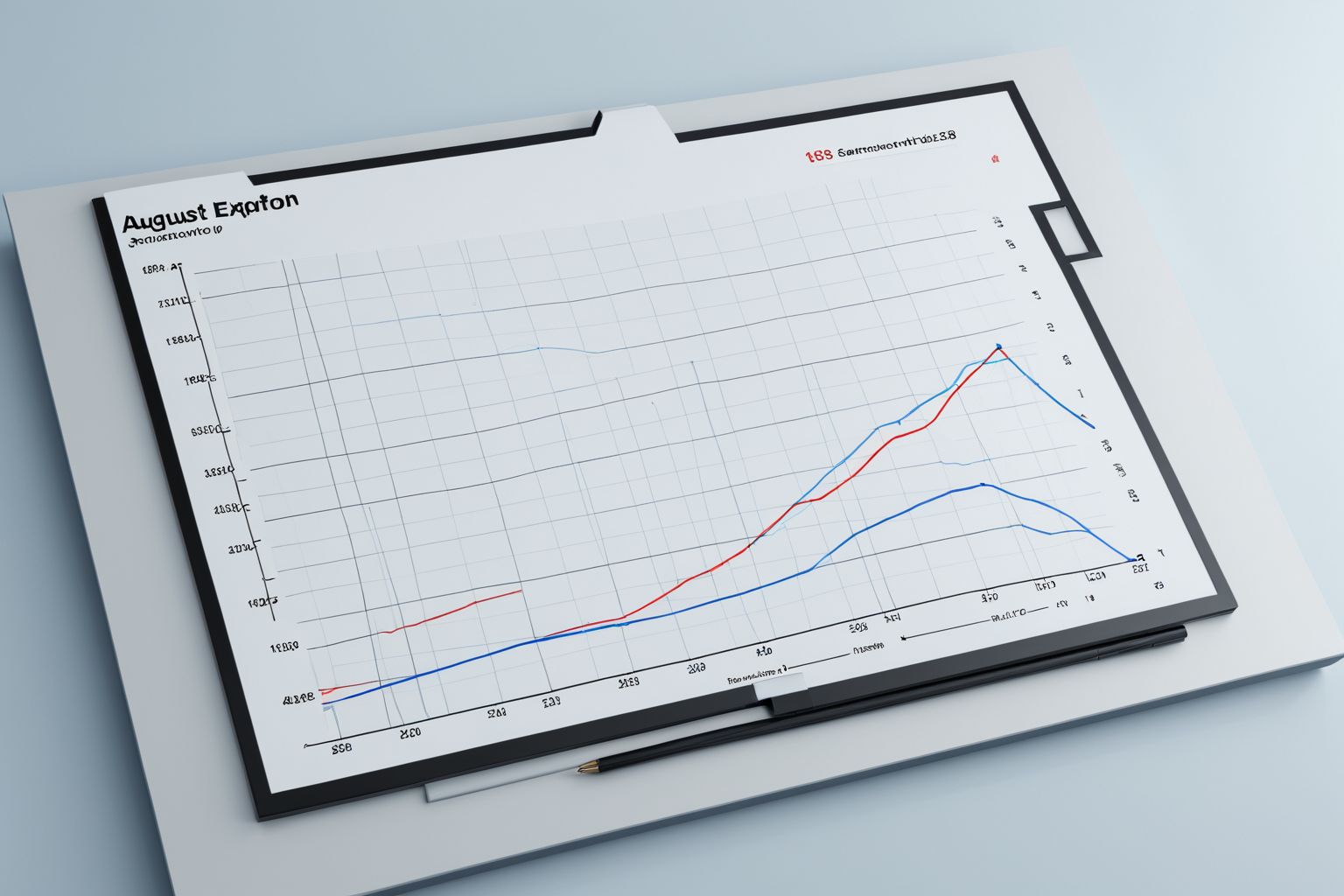
August Exports Set All-Time Record
South Korea's exports reached a record $98.3 billion in August 2026, marking the 15th consecutive month of growth. This surge is primarily attributed to increased semiconductor and SSD exports driven by investments in semiconductors and AI.

Semiconductor Exports Surge 206%
August's semiconductor exports soared by 206%, setting a new all-time high. The significant increase was largely due to expanded investments in AI-related technologies, leading to strong growth in both semiconductors and SSDs, which contributed to overall ICT sector expansion.
ICT Exports Reach Approximately $60 Billion
August's ICT exports reached approximately $60 billion, a record high. This reflects the growth in semiconductor and AI-related sectors, particularly driven by increased SSD exports.
Trade Surplus of $34.8 Billion
South Korea recorded a trade surplus of $3.48 billion in August, expanding due to strong semiconductor exports. Regionally, export growth was most notable in Daegu-Gyeongbuk and Jeonbuk, while Gyeongsangnam (south) saw a decline.
Regional Export Trends
The trade balance for Daegu-Gyeongbuk region reached $2.7 billion in surplus, up 13.4% year-on-year. Jeonbuk also saw exports rise by 19.8% in August, resulting in a cumulative annual surplus of $1.083 billion.
Conversely, Gyeongsangnam's exports declined by 5.1% to $3.16 billion, while Jeonnam-Gwangju recorded a trade surplus of $360 million.
Growth Centered on Semiconductors and AI
The primary driver behind August's export growth was increased investment in semiconductors and AI-related sectors. This reflects strong global demand for AI technology and semiconductors, particularly in the U.S. and European markets.
While automotive and shipbuilding exports declined sharply, this is considered a short-term fluctuation as semiconductor and ICT sector growth offset these declines.
Regional Economic Trends
The Daegu-Gyeongbuk region, home to concentrated semiconductor industries, led the export growth. Jeonbuk also saw significant export increases due to expansion in semiconductors and ICT sectors.
Gyeongsangnam experienced a decline in exports due to weakness in automotive and shipbuilding sectors, reflecting regional industrial structure differences. Jeonnam-Gwangju maintained economic stability with an expanding trade surplus.
Second-Half Growth Outlook
South Korea's second-half export growth is projected at 40% in AI-semiconductor-focused sectors, driven by increased global demand for AI technology and expanded semiconductor supply chains.
Taiwan also saw a 41% surge in August exports, while Vietnam reported increased coffee exports but a 11.2% decline in export value compared to the same period last year.
Key Drivers of Export Growth
The 206% surge in semiconductor exports is linked to expanded AI-related investments, particularly in SSDs. This reflects increased global demand for semiconductors due to the expansion of data centers and cloud services.
The growth in ICT exports also stems from the convergence of AI technology and semiconductors, contributing to South Korea's accelerated digital transformation.
Shift in Export Structure
August's export growth was primarily driven by semiconductor and AI-related sectors rather than traditional automotive and shipbuilding industries. This structural shift signals a strategic direction for future economic growth and reflects South Korea's evolving economic structure.
Notably, the strong export performance in Daegu-Gyeongbuk and Jeonbuk regions—both concentrated in semiconductor manufacturing—demonstrates regional economic activation, which is analyzed as a result of government industrial policies.
Future Economic Outlook
Second-half export growth is expected to reach the 40% range centered on AI and semiconductors, indicating strengthened global competitiveness. Semiconductor demand is anticipated to continue rising globally.
While automotive and shipbuilding sectors may remain weak, semiconductor and ICT sector growth is expected to offset these challenges, marking a significant indicator of South Korea's structural economic shift.
Key Data to Monitor
To accurately assess August export trends, focus on regional export data and semiconductor export growth rates. Comparing the strong performance in Daegu-Gyeongbuk and Jeonbuk with Gyeongsangnam's decline is particularly important.
The scale of trade surplus and changes in regional trade balances are also critical points for understanding shifts in South Korea's export structure.
Frequently Asked Questions
What was the main reason behind August's record exports?
The surge in semiconductor and SSD exports driven by increased investments in semiconductors and AI-related sectors.
What was the trade surplus for August?
South Korea recorded a trade surplus of $3.48 billion in August.
Which regions showed strong export growth?
Daegu-Gyeongbuk and Jeonbuk regions experienced strong export growth, while Gyeongsangnam saw a decline in exports.
Frequently Asked Questions
August's exports reached a record $98.3 billion, with semiconductor and AI-driven growth standing out. This reflects South Korea's accelerated digital transformation and strengthened global competitiveness.
Notably, the strong export performance in Daegu-Gyeongbuk and Jeonbuk regions—both concentrated in semiconductor manufacturing—demonstrates regional economic activation, laying the foundation for future economic growth. While automotive and shipbuilding sectors remain weak, semiconductor and ICT sector growth is expected to offset these challenges.
Looking ahead, second-half exports are projected to grow by 40% in AI-semiconductor-focused sectors, accelerating South Korea's structural economic shift. Therefore, government and businesses should continue expanding investments in semiconductor and AI-related fields.
You can view similar articles on this topic at once.
View Related ArticlesFAQ
What was the main reason behind August's record exports?
The surge in semiconductor and SSD exports driven by increased investments in semiconductors and AI-related sectors.
What was the trade surplus for August?
South Korea recorded a trade surplus of $3.48 billion in August.
Which regions showed strong export growth?
Daegu-Gyeongbuk and Jeonbuk regions experienced strong export growth, while Gyeongsangnam saw a decline in exports.
Korean Source
This article is an English localization of a Korean-language report from BlogScore. Original: 8월 수출 역대 최대, 주요 산업별 실적 분석