
Analyzing Bill Gates' Energy Strategy Through SMR Collaboration with Cho Tae-won

Bridging Bill Gates and Cho Tae-won: SMR Collaboration to Target AI Power Market
Cho Tae-won and Bill Gates are solidifying a strategy through Small Modular Reactor (SMR) collaboration to address rising power demands from AI data centers. Following Gates' second visit to South Korea within a year, the two held discussions at the National Assembly on SMR technology development and nuclear export strategies, alongside their first meeting with Korean companies including HD Hyundai and Terapower, where they announced plans for 2-3 reactors annually.
This collaboration reflects a strategic alliance aimed at responding to increasing power demands in the AI era. The partnership has been strengthened through two meetings between Cho Tae-won and Gates over the past year, focusing on SMR technology development and nuclear export strategies. Notably, SK Innovation and Terapower are taking leading roles in building an AI power value chain, with Gates' investment accelerating SMR construction and legislative competition at the state level, injecting new momentum into South Korea's nuclear export strategy.
Gates visited the National Assembly to discuss SMR collaboration strategies and tightened cooperation during their fourth meeting with Cho Tae-won. Meanwhile, SK Innovation and Gates' company Terapower are advancing SMR projects and targeting the AI power market.
As reported so far, Cho Tae-won and Gates' meetings centered around a visit to the National Assembly on August 14, 2026, and coverage by NewsTomato on August 17, focusing on strengthening SMR collaboration and building an AI power value chain. Specifically, they discussed next-generation reactors and ship-mounted SMRs during their discussions.
SMR stands for Small Modular Reactor, a technology characterized by smaller scale and flexible design compared to traditional large nuclear plants. This makes it well-suited for rapid deployment in sectors experiencing increased power demand, such as AI data centers.
The collaboration between Gates and Cho Tae-won has been concretized through two meetings within the past year, representing a strategic alliance aimed at addressing power supply needs for AI data centers. With Gates' investment driving SMR construction and legislative competition, SK Innovation and Terapower are accelerating efforts to build an AI power value chain.
Meanwhile, stock market reactions have been observed following Gates' visit, with increased share prices for nuclear stocks and companies related to SMR technology. This suggests the potential for positive economic impact from this SMR collaboration.
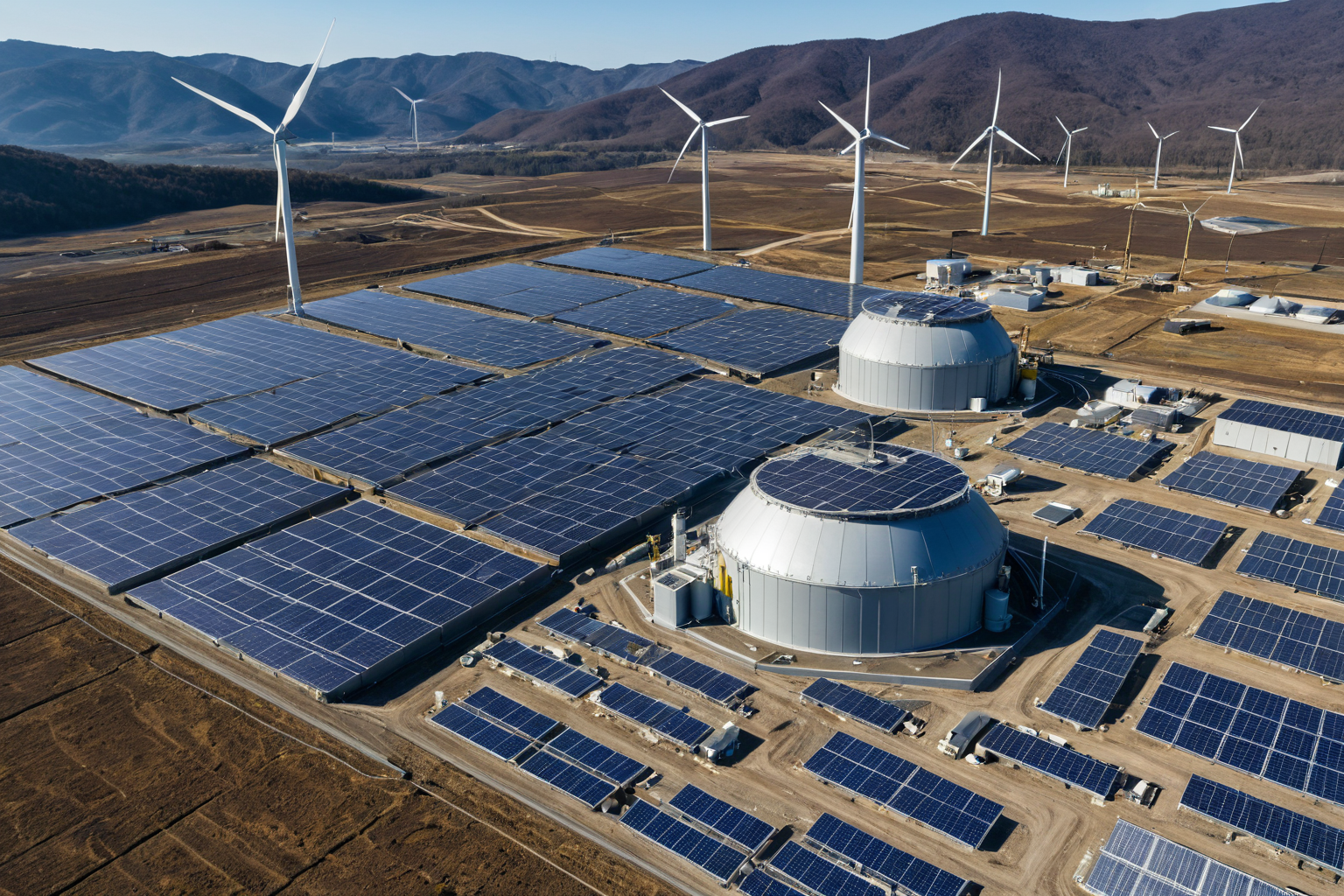
Key Companies and Strategic Alliances in SMR Collaboration
HD Hyundai and Terapower are leading companies driving SMR collaboration between Gates and Cho Tae-won, announcing a plan to produce 2-3 reactors annually during their first meeting. This represents a concrete step toward addressing the growing power demand from AI data centers, with SK Innovation and Terapower's cooperation at the core.
Specifically, SK Innovation and Terapower are taking leading roles in building an AI power value chain, accelerating the pace and scale of collaboration as companies directly invested by Gates. They are developing SMR technology while formulating strategies to secure competitiveness in the market for power supply to AI data centers.
Cho Tae-won discussed next-generation reactors and ship-mounted SMRs during their fourth meeting with Gates, interpreted as a strategy to expand SMR applications across various fields. Ship-mounted SMRs hold potential for pioneering new markets by connecting with marine industries.
The Korean government is currently advancing legislative competition at the state level regarding SMR collaboration, expected to play a key role in South Korea's nuclear export strategy. With Gates' investment, active government support will be essential, and this is anticipated to strengthen the global competitiveness of SMR technology.
SMR Collaboration Strategy Addressing Rising AI Power Demand
The rapid expansion of AI data centers has led to a surge in power demand, presenting new challenges that surpass traditional power grids. SMRs are designed as smaller modular units, allowing for faster installation and flexible power supply compared to large-scale nuclear plants.
Specifically, the collaboration between Gates and Cho Tae-won represents a strategic alliance tailored to meet the power demands of AI data centers, with SMR technology development complementing efforts to strengthen nuclear export strategies. This is expected to serve as an important milestone for South Korea's nuclear technology to gain competitiveness in global markets.
Discussions on SMR collaboration have been concretized through two meetings within the past year, and Gates' direct visit to the National Assembly to discuss SMR collaboration strategy is noteworthy. This emphasizes the importance of government-business cooperation while highlighting that Korean government support is essential.
During their fourth meeting, Cho Tae-won discussed next-generation reactors and ship-mounted SMRs with Gates, interpreted as a strategic effort to expand applications across various fields for SMR technology. Ship-mounted SMRs hold potential for pioneering new markets by connecting with marine industries.
Government Support and Legislative Competition for SMR Collaboration
The Korean government is currently advancing legislative competition at the state level regarding SMR collaboration, expected to serve as a key element in nuclear export strategy. With Gates' investment, active government support will be necessary, and this is anticipated to strengthen the global competitiveness of SMR technology.
Specifically, legislative efforts are focused on creating a legal foundation for accelerating SMR construction and regulatory easing. This stage is evaluated as an important step to accelerate SMR commercialization and global market entry.
The SMR collaboration was concretized during the fourth meeting between Cho Tae-won and Gates, representing a strategy to respond to increasing AI power demand. It has significant potential to become a new growth driver for South Korea's nuclear industry. SK Innovation and Terapower are accelerating efforts to build an AI power value chain through their cooperation.
Economic Impact of SMR Collaboration and Stock Market Reactions
Following Gates' visit, stock market reactions have been observed, with upward trends in share prices for nuclear stocks and companies related to SMR technology. This suggests the potential for positive economic impact from this SMR collaboration.
Specifically, the cooperation between SK Innovation and Terapower is expected to enhance corporate competitiveness while creating new markets, contributing to the global spread of SMR technology.
SMR Collaboration and Power Supply for AI Data Centers
The rapid expansion of AI data centers has led to a surge in power demand, presenting new challenges that surpass traditional power grids. SMRs are designed as smaller modular units, allowing for faster installation and flexible power supply compared to large-scale nuclear plants.
Specifically, the collaboration between Gates and Cho Tae-won represents a strategic alliance tailored to meet the power demands of AI data centers, with SMR technology development complementing efforts to strengthen nuclear export strategies. This is expected to serve as an important milestone for South Korea's nuclear technology to gain competitiveness in global markets.
Future Outlook for SMR Collaboration
SMR collaboration is positioning itself as a core technology for power supply to AI data centers, and the strategy concretized during Cho Tae-won and Gates' fourth meeting will determine future outcomes. SK Innovation and Terapower are accelerating efforts to build an AI power value chain through their cooperation.
Discussions between Cho Tae-won and Gates focused on next-generation reactors and ship-mounted SMRs, interpreted as a strategy to expand SMR applications across various fields. Additionally, legislative competition is expected to accelerate regulatory easing and construction, injecting new vitality into South Korea's nuclear export strategy.
Information to Verify
Specific plans related to government support for SMR collaboration remain undisclosed, with the ongoing state-level legislative competition making the passage of future bills and changes in regulatory environment critical.
Specifically, the scale of Gates' investment and SMR construction schedules have not been publicly disclosed yet, and these factors are expected to determine the speed and success of the collaboration.
Additionally, while SK Innovation and Terapower are collaborating on AI power value chain development, their technology development and market entry strategies remain somewhat unclear, requiring further investigation.
Frequently Asked Questions
What is SMR?
SMR (Small Modular Reactor) stands for Small Modular Reactor, a technology characterized by smaller scale and flexible design compared to traditional large nuclear plants. This makes it well-suited for rapid deployment in sectors experiencing increased power demand, such as AI data centers.
Why are Bill Gates and Cho Tae-won strengthening SMR collaboration?
The rapid expansion of AI data centers has led to a surge in power demand. To address this, they have established a strategic alliance leveraging SMR technology. Gates and Cho Tae-won are reinforcing their collaboration to secure competitiveness in the AI power market.
What impact has SMR collaboration had on stock markets?
Following Gates' visit and announcement of SMR collaboration, upward trends in share prices have been observed for nuclear stocks and companies related to SMR technology. This suggests that SMR collaboration could have positive economic impacts.
Frequently Asked Questions
The SMR collaboration between Bill Gates and Cho Tae-won represents a key strategy to address rising power demands from AI data centers, strengthening South Korea's nuclear export strategy through government support and corporate collaboration. The first meeting with Korean companies including HD Hyundai and Terapower announced plans for 2-3 reactors annually, showing concrete steps toward SMR commercialization.
Cho Tae-won's fourth meeting with Gates discussed next-generation reactors and ship-mounted SMRs, interpreted as a strategy to expand SMR applications across various fields. Additionally, legislative competition is planned to accelerate regulatory easing and construction, injecting new vitality into South Korea's nuclear export strategy.
SMR collaboration is positioning itself as a core technology for power supply to AI data centers, with Gates' investment and SK Innovation and Terapower leading efforts to build an AI power value chain. This represents an important milestone for enhancing the global competitiveness of South Korea's nuclear industry.
You can view similar articles on this topic in one place.
View Related ArticlesFAQ
What is SMR?
SMR (Small Modular Reactor) is a smaller-scale, flexible nuclear reactor technology designed for rapid deployment in high-demand sectors like AI data centers.
Why are Bill Gates and Cho Tae-won strengthening SMR collaboration?
To address the surge in power demand from rapidly expanding AI data centers, they're forming a strategic alliance using SMR technology to boost South Korea's nuclear export strategy.
What impact has SMR collaboration had on stock markets?
Following Gates' visit, nuclear and SMR-related companies have seen rising share prices, indicating potential positive economic effects from this collaboration.
Korean Source
This article is an English localization of a Korean-language report from BlogScore. Original: SMR 협력으로 빌 게이츠의 에너지 기술 전략을 분석해 봤습니다