
Analysis of U.S.-South Korea Joint Military Exercise Cuts: Reasons and Impacts
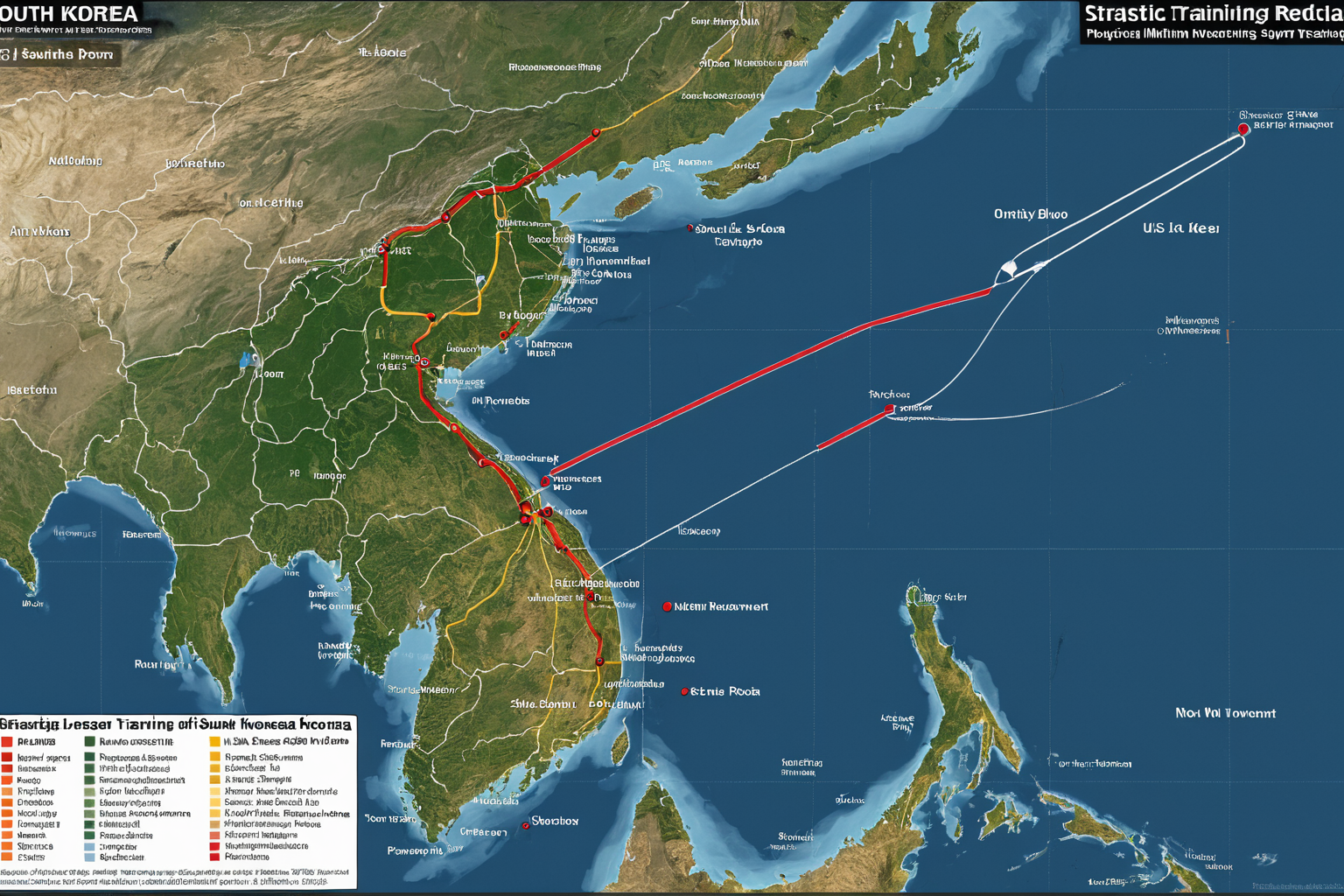
Core Reasons Behind the U.S.-South Korea Joint Exercise Cuts
The Trump administration has significantly reduced U.S.-South Korea joint military exercises, interpreted as both an economic measure and part of a strategy to improve relations with North Korea. South Korea's decision not to provide military support for the Iran conflict was also cited as a related factor.
The Trump administration's move goes beyond mere military considerations, representing a strategic approach to U.S. economic restructuring and resolving the North Korean nuclear issue. Notably, U.S.-South Korea joint exercises are large-scale events costing billions annually, and the Trump administration had been considering scaling back the exercises to alleviate economic burdens—a policy consistent with broader efforts in the U.S. to reduce military spending.
South Korea's decision not to support the Iran conflict was a direct factor influencing the Trump administration's decision. South Korea maintained a neutral stance during the Iran war, refusing military support, which prompted the U.S. government to reassess trust in U.S.-South Korea relations. Specifically, the Trump administration linked the Iran issue with North Korean nuclear concerns, concluding that South Korea's neutrality could create opportunities for dialogue with North Korea.
Key Events Surrounding the Joint Exercise Cuts
On August 17, 2026, the Trump administration ordered a significant reduction in U.S.-South Korea joint exercises. On August 18, newspapers like Kyunghyang Shinmun and Chosun Ilbo published analyses of the reasons behind the cuts. On August 19, the U.S. Department of Defense officially announced the substantial reduction.
Subsequently, on August 21, North Korea resumed military actions by launching a large number of ballistic missiles despite the exercise cut. This demonstrated that the reduction could be perceived as diminishing deterrence against North Korea—a key concern for Pyongyang. North Korea launched three ballistic missiles in a single day on August 21, an unprecedented activity over the past six months, and warned of further military actions after the launches.
On August 20, U.S. senators expressed concerns about weakening alliance trust through BBC interviews. This marked the first official statement from the U.S. Congress regarding opposition to the exercise cuts, signaling potential political controversy within the U.S. over this decision.
Investigation into Causes of Exercise Cuts
The Trump administration's decision to reduce joint exercises is analyzed as both an economic measure and a strategy to improve relations with North Korea. South Korea's refusal to support the Iran conflict was also cited as a factor.
The Trump administration interpreted this move as an effort to improve relations with Kim Jong-un, expressing willingness to engage in dialogue. Trump publicly stated he maintained a very good relationship with Kim Jong-un on August 17, 2026, indicating a strategic approach aimed at expanding opportunities for dialogue with North Korea.
South Korea's neutral stance on the Iran conflict was linked to U.S. economic considerations. The Trump administration connected South Korea's neutrality in the Iran issue with North Korean nuclear concerns, concluding that it could create opportunities for dialogue with North Korea.
The U.S. Department of Defense stated that despite the reduction, essential readiness measures would be maintained to minimize impact on military effectiveness—a sign of commitment to maintaining stability within the U.S.-South Korea alliance.
Opposition from U.S. Congress and Opposition Parties
U.S. Congress and opposition parties have expressed concern over weakened alliances and reduced deterrence against North Korea, opposing the cuts to joint exercises. The U.S. Senate and House passed a defense authorization bill to prevent unilateral reduction of U.S. troops in South Korea.
On August 18, 2026, 45 senators and 37 representatives sent a letter demanding the withdrawal of the exercise cut decision. This marked a strong congressional reaction, with significant potential for this issue to become a pivotal debate determining the future size of U.S. forces in South Korea and the direction of the alliance.
U.S. senators conveyed concerns about weakening alliance trust through BBC interviews, marking the first public opposition from Congress on this matter—indicating that the exercise cut decision could escalate into broader political controversy within the United States.
Reactions from North Korea and the Philippines
North Korea resumed ballistic missile launches despite the exercise reduction, indicating it does not view the cuts as an opportunity for dialogue but instead is committed to a hardline military stance.
On August 21, 2026, North Korea launched three ballistic missiles—the highest number in six months—and warned of further military actions afterward. This demonstrated that North Korea perceives the exercise cut as reducing deterrence against it—a key concern for Pyongyang.
The Philippines warned that the reduction could be exploited to expand China's influence. The Philippine Department of Defense issued this warning on September 7, 2026, expressing concerns about China's growing military presence in Southeast Asia and analyzing that reduced joint exercises might encourage Chinese military activity.
Response Measures and Security Information Regarding Exercise Cuts
The U.S. Department of Defense stated it would maintain essential readiness measures despite the exercise reduction—a sign of commitment to preserving alliance stability.
The U.S. has shifted its strategic focus toward the First Island Chain, pressuring South Korea for greater military modernization costs. This can be viewed as a response measure related to the exercise cuts and represents a new strategic approach for the future of the U.S.-South Korea alliance.
While the South Korean government has not officially commented on the decision to reduce joint exercises, it is internally reviewing responses related to the scale reduction. This suggests a strategic approach where South Korea seeks to maintain military cooperation with the U.S. while pursuing economic burden relief.
Verified Information Regarding Exercise Cuts
The possibility of strengthened anti-U.S. alliances as a result of exercise cuts remains unconfirmed. Some media have raised concerns that this move could strengthen anti-U.S. coalitions, but no concrete evidence supports this claim.
Economic reasons and the strategy to improve North Korean relations are confirmed facts behind the cuts. However, whether South Korea's lack of support for Iran directly influenced the decision is still under investigation.
Given strong opposition from U.S. Congress and the opposition, the possibility of reversing the exercise cut must also be considered—a factor that could significantly impact the future size of U.S. forces in South Korea and the direction of the alliance.
Frequently Asked Questions
Will deterrence against North Korea decrease due to joint exercise cuts?
The U.S. Department of Defense stated it would maintain essential readiness measures despite the reduction, but Congress and opposition parties remain concerned about reduced deterrence.
Was South Korea's refusal to support Iran a direct cause for the exercise cut?
South Korea's lack of military support for Iran was cited as a reason for the cuts, though no concrete evidence confirms this. Economic factors and strategy to improve North Korean relations are considered primary causes.
Is North Korea's ballistic missile launch related to the exercise reduction?
North Korea resumed ballistic missile launches despite the exercise cut, indicating it does not view the cuts as an opportunity for dialogue but is committed to a hardline military stance.
You can explore more articles on similar topics all in one place.
View Related ArticlesFAQ
Will deterrence against North Korea decrease due to joint exercise cuts?
The U.S. Department of Defense stated it would maintain essential readiness measures despite the reduction, but Congress and opposition parties remain concerned about reduced deterrence.
Was South Korea's refusal to support Iran a direct cause for the exercise cut?
South Korea's lack of military support for Iran was cited as a reason for the cuts, though no concrete evidence confirms this. Economic factors and strategy to improve North Korean relations are considered primary causes.
Is North Korea's ballistic missile launch related to the exercise reduction?
North Korea resumed ballistic missile launches despite the exercise cut, indicating it does not view the cuts as an opportunity for dialogue but is committed to a hardline military stance.
Korean Source
This article is an English localization of a Korean-language report from BlogScore. Original: 한미연합훈련 축소 이유와 영향 분석