
Analysis of Recent Supreme Court Precedents on Treason Cases


Analysis of Recent Supreme Court Precedents on Treason Cases
The Supreme Court has referred the appeal in the treason case against Han Deok-su and Lee Sang-min to a full court hearing. This decision holds significant meaning as it aims to establish 'December 3rd Martial Law = Treason' as a legal standard. According to reports dated August 5, 2026, the Supreme Court chose this approach due to the need for historical judicial evaluation.
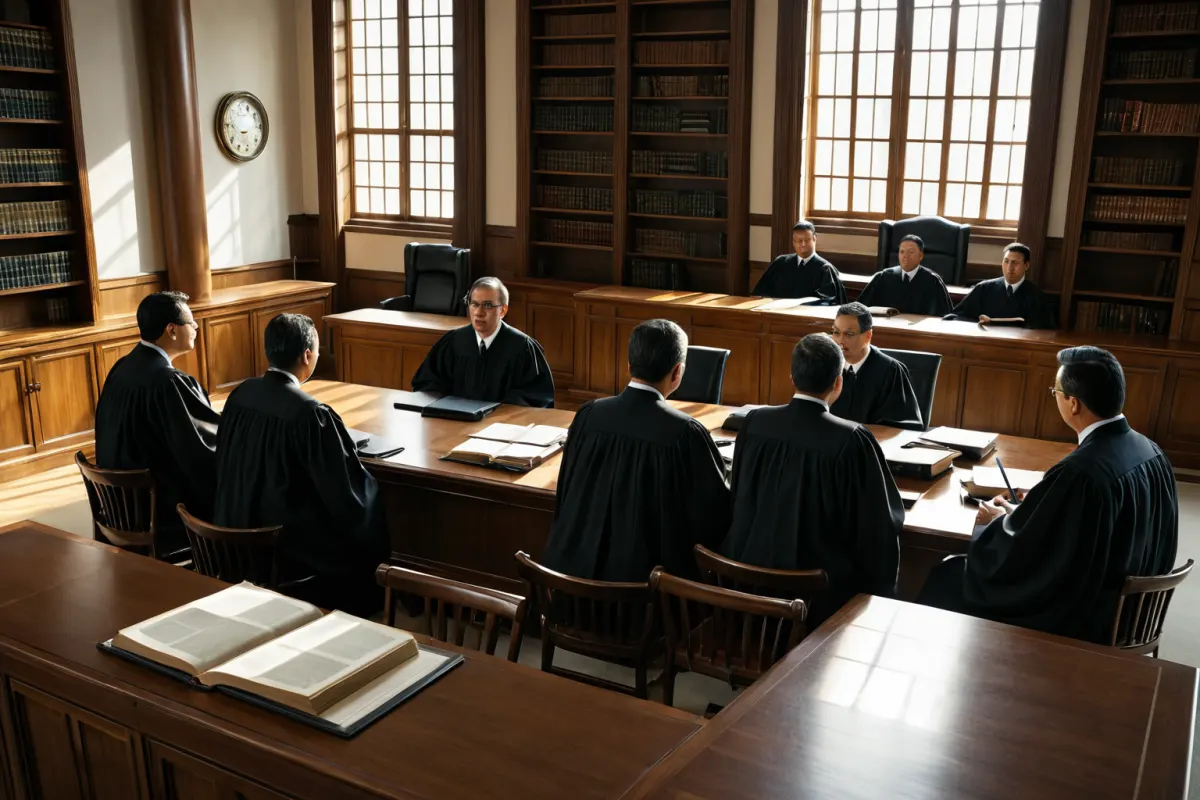
Establishment of Dedicated Treason Tribunal Regulations
The Supreme Court introduced regulations establishing a dedicated treason tribunal on December 18, 2025, and formally implemented 'Regulations for Establishing a Treason Tribunal' on January 30, 2026. These regulations introduce a random assignment principle to enhance judicial fairness.
This legal framework aims to clearly define how the 'December 3rd Martial Law = Treason' determination will affect case rulings. The Supreme Court has confirmed the accomplice relationship between Han Deok-su and Lee Sang-min, establishing the basis for their potential punishment under treason charges.
Background of Full Court Hearing Decision
The Supreme Court's decision to hold a full court hearing was intended to establish 'December 3rd Martial Law = Treason' as a legal standard. Multiple media reports indicate that the Court viewed this case as requiring historical judicial evaluation.
The Special Prosecution has criticized the Supreme Court's decision as 'favoritism,' but the Court plans to make a careful judgment through full court proceedings. This approach appears driven by high public interest in establishing clear legal standards.
Connection to Former President Yoon Suk-yeol's Case
The Supreme Court's decision connects to former President Yoon Suk-yeol's ongoing second appeal regarding 'obstruction of arrest,' which is currently being heard by the dedicated treason tribunal. According to a March 4, 2026 report, Yoon's case has already been assigned to this specialized court.
The Supreme Court established sentencing guidelines for capital punishment on February 17, 2026. This measure aims to clarify the standards for punishing treason charges and is expected to significantly influence future rulings.
Process of Establishing Legal Standards for Treason Cases
Establishing 'December 3rd Martial Law = Treason' as a legal standard requires a full court hearing by the Supreme Court. The cases involving Han Deok-su and Lee Sang-min are expected to play a key role in establishing this standard.
As reported by multiple media outlets, the Supreme Court has emphasized the need for 'historical judicial evaluation,' requiring in-depth analysis of the case. This indicates that legal judgments are moving beyond simple legal interpretation to consider broader social context.
Random Assignment Principle in Treason Tribunal
The dedicated treason tribunal has implemented a 'random assignment' principle. This measure aims to enhance judicial fairness by reducing the possibility of biased rulings by specific judges on sensitive cases.
Legal experts anticipate that this random assignment principle will contribute to fair trials in treason cases and increase public trust in the Supreme Court's legal judgment process.
Establishment of Capital Punishment Criteria
The Supreme Court established capital punishment criteria on February 17, 2026. This measure aims to clarify standards for punishing treason charges and will serve as an important reference in future rulings.
The capital punishment criteria appear to have been determined considering the severity of treason cases and their social impact. This reflects the Supreme Court's effort to clearly define the level of punishment for treason charges.
Case Background and Expected Ruling
Han Deok-su and Lee Sang-min have been charged with treason, and their accomplice relationship has been confirmed. The Supreme Court plans to establish 'December 3rd Martial Law = Treason' as a legal standard through the full court hearing.
This case is expected to play an important role in establishing legal standards for treason charges. Social discussions surrounding the ongoing full court hearing are anticipated to be active during this period.
Importance of Establishing Legal Standards
If 'December 3rd Martial Law = Treason' is legally established, it will significantly influence rulings in future treason cases. This can be viewed as a process reflecting social consensus beyond simple legal interpretation.
The Supreme Court has emphasized historical judicial evaluation, explicitly stating that legal judgments on treason cases should consider both legal principles and broader social context. This could mark a turning point in the direction of legal interpretation.
Social Discussion and Response
Following the Supreme Court's decision, public discussion about treason cases has intensified. If the 'December 3rd Martial Law = Treason' standard is confirmed, it will become an important reference for rulings in treason cases.
Legal experts are closely watching how this decision will affect future legal precedents. Once clear standards for treason cases are established, similar cases can be handled with a consistent approach.
Key Information to Verify
The outcome of the Supreme Court's full court hearing will play a decisive role in establishing 'December 3rd Martial Law = Treason' as a legal standard. This case holds significant meaning for establishing legal standards regarding treason charges.
It's also important to note that former President Yoon Suk-yeol's second appeal regarding 'obstruction of arrest' is currently being handled by the dedicated treason tribunal. Since this case is proceeding after the Supreme Court established capital punishment criteria, there is high public interest in its outcome.
Frequently Asked Questions
What is the purpose of introducing the random assignment principle in the treason tribunal?
The random assignment principle was introduced to enhance judicial fairness. It reduces the possibility of biased rulings by specific judges and ensures all cases are handled impartially.
Why is it important for the Supreme Court to establish 'December 3rd Martial Law = Treason' as a standard?
Establishing this standard will serve as an important reference in treason case rulings, allowing for consistent handling of similar cases. This reflects legal stability and social consensus.
Why is former President Yoon Suk-yeol's 'obstruction of arrest' second appeal being handled by the dedicated treason tribunal?
Yoon Suk-yeol's 'obstruction of arrest' case is connected to treason charges, so it is being heard by the dedicated treason tribunal. This case is proceeding after the Supreme Court established capital punishment criteria, leading to high public interest in its outcome.
Why was the Supreme Court's decision criticized as 'favoritism'?
The Special Prosecution criticized the Supreme Court's decision as 'favoritism,' reflecting concerns that it might lead to biased judgments toward specific individuals or groups.
Frequently Asked Questions
The Supreme Court's referral of Han Deok-su and Lee Sang-min's treason appeal to a full court hearing holds significant meaning for establishing 'December 3rd Martial Law = Treason' as a legal standard. This reflects judicial evaluation that considers not only legal principles but also social context.
The random assignment principle in the dedicated treason tribunal aims to enhance fairness in trials, and this approach is expected to become an important standard for handling treason cases moving forward. The ongoing second appeal regarding former President Yoon Suk-yeol's 'obstruction of arrest' is being handled by this specialized court, drawing significant public attention.
The Supreme Court has emphasized historical judicial evaluation, explicitly stating that rulings on treason charges should consider both legal principles and social context. This is expected to have a major impact on future legal precedents and social discussions.
You can view similar articles about this topic in one place.
View Related ArticlesFAQ
What is the purpose of introducing the random assignment principle in the treason tribunal?
The random assignment principle was introduced to enhance judicial fairness. It reduces the possibility of biased rulings by specific judges and ensures all cases are handled impartially.
Why is it important for the Supreme Court to establish 'December 3rd Martial Law = Treason' as a standard?
Establishing this standard will serve as an important reference in treason case rulings, allowing for consistent handling of similar cases. This reflects legal stability and social consensus.
Why is former President Yoon Suk-yeol's 'obstruction of arrest' second appeal being handled by the dedicated treason tribunal?
Yoon Suk-yeol's 'obstruction of arrest' case is connected to treason charges, so it is being heard by the dedicated treason tribunal. This case is proceeding after the Supreme Court established capital punishment criteria, leading to high public interest in its outcome.
Why was the Supreme Court's decision criticized as 'favoritism'?
The Special Prosecution criticized the Supreme Court's decision as 'favoritism,' reflecting concerns that it might lead to biased judgments toward specific individuals or groups.
Korean Source
This article is an English localization of a Korean-language report from BlogScore. Original: 대법 내란 심리와 관련된 최신 판례 분석